
Last updated September 22, 2026
Free on-site gate assessment - hinges, posts, and your LiftMaster or Nice gate operator checked before anything is quoted
The assessment is free and the quote is the invoice.
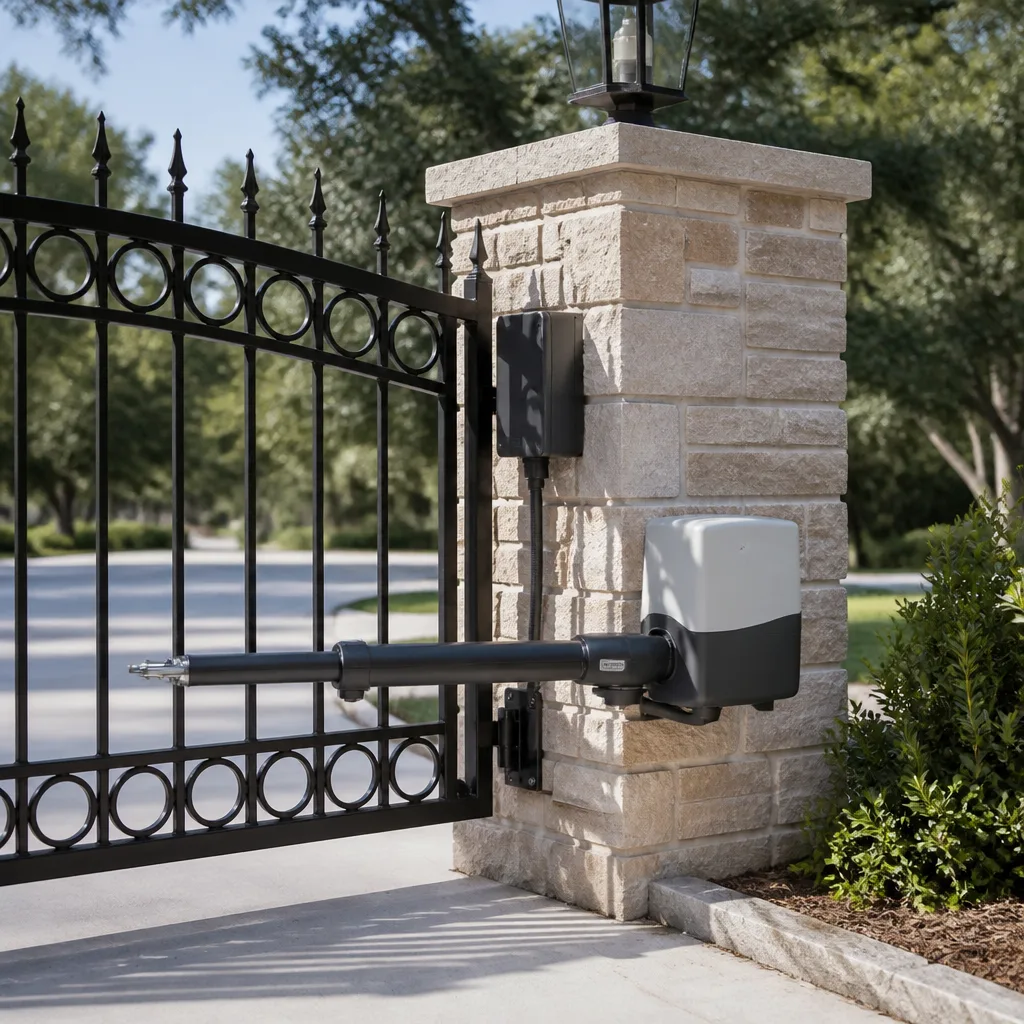
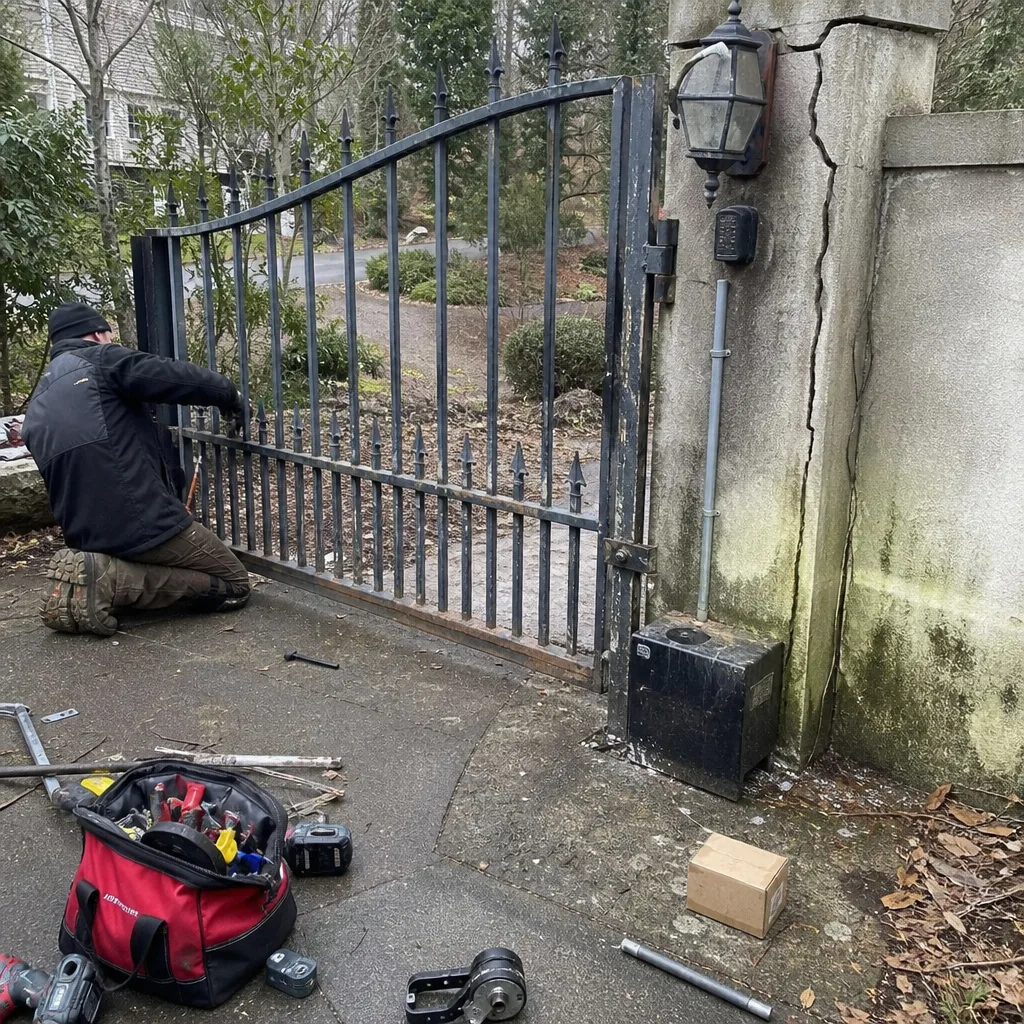 Before
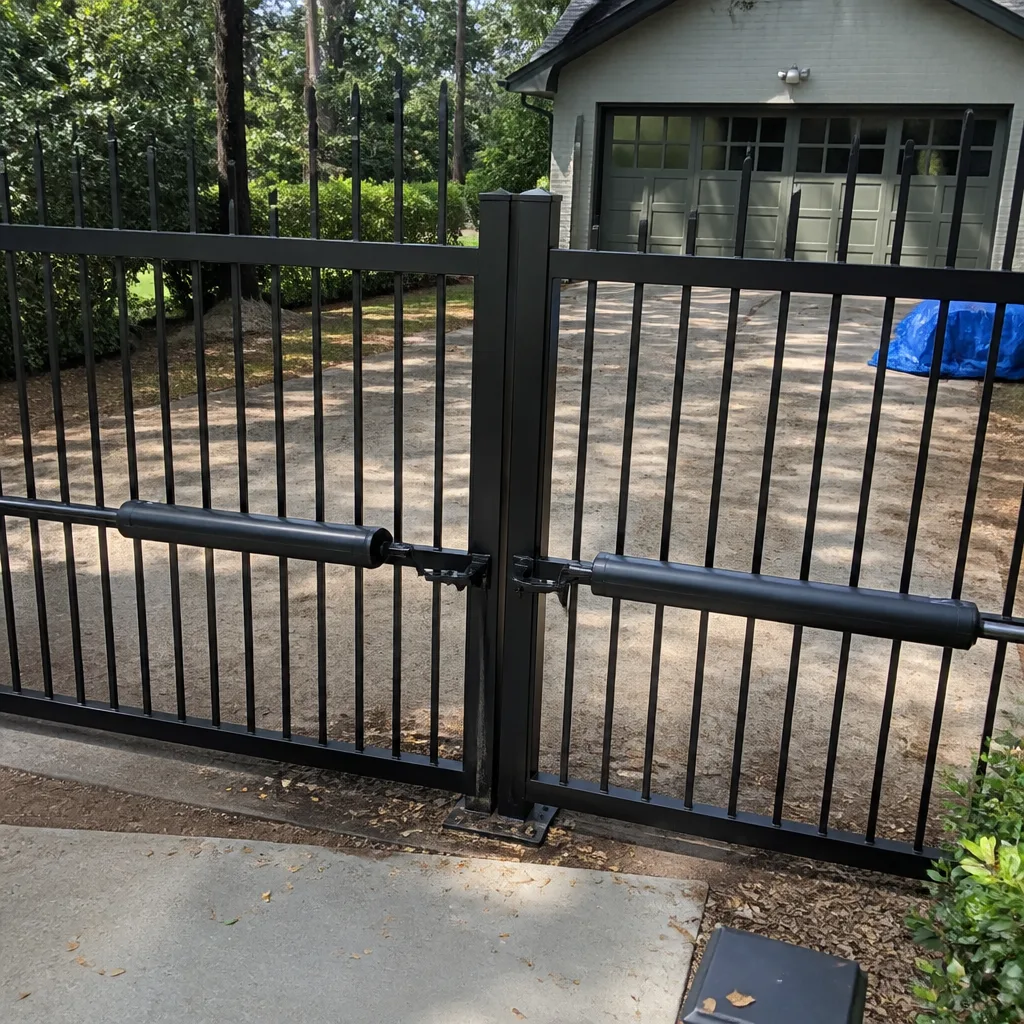 After
After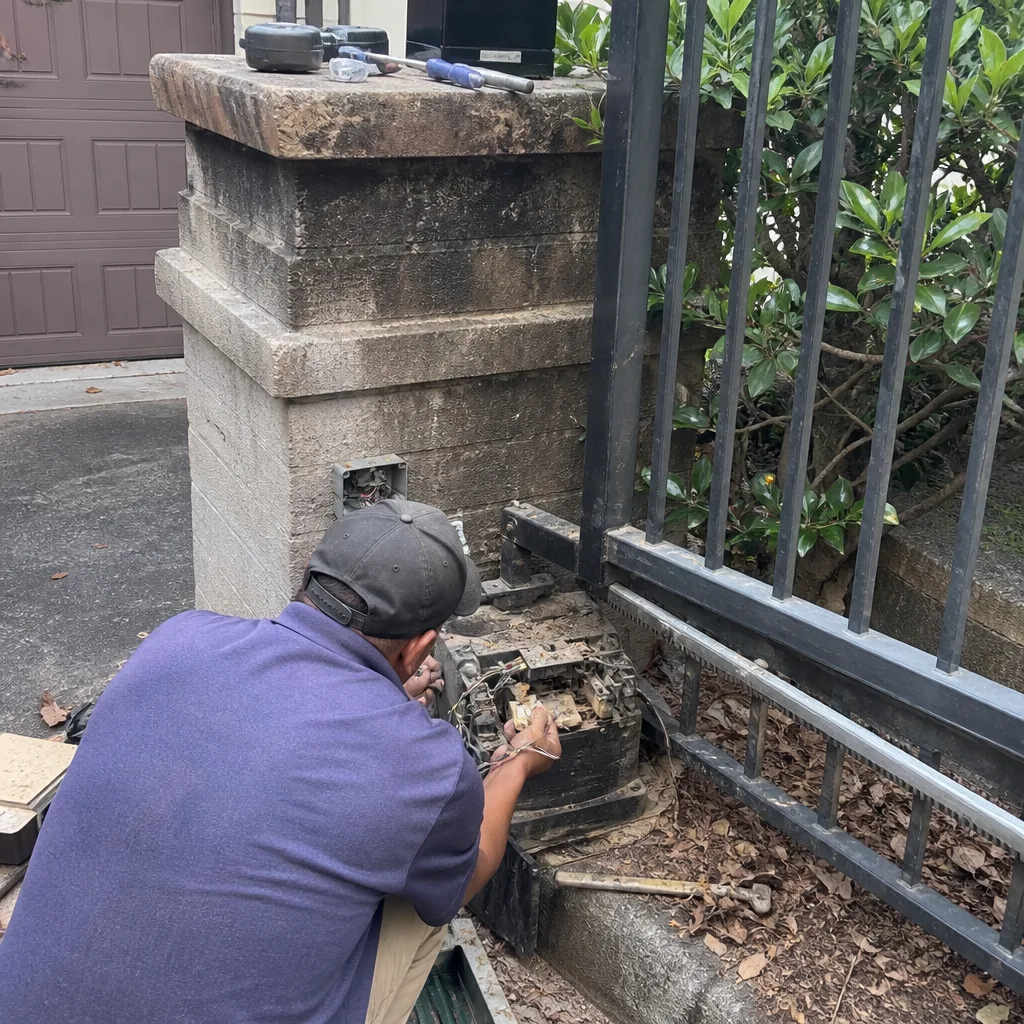 Before
 After
After Before
 After
AfterGate Repair Maintenance Checklist for Roswell Homeowners
Every gate technician who comes after the first one is flying blind unless someone recorded what “normal” looked like. In Roswell, we’ve opened control boxes on swing gates in historic district homes where five different companies had “adjusted” the same Linear operator over eight years, each one guessing at the previous settings because no baseline was ever written down. A lubrication schedule without documented starting values is just deferred guessing. This guide gives Roswell homeowners a documented baseline protocol so any future deviation is measurable, not guesswork, and complements our Gate Repair services for when professional help is needed. You’ll learn what to photograph, what to measure, how Roswell’s pollen load and red clay change your maintenance intervals, and where to store records so they survive your next phone upgrade.
Quick Answer
A proper gate maintenance checklist for Roswell homeowners includes monthly safety tests, quarterly mechanical inspections with photographed baseline readings, and seasonal adjustments for Georgia pollen and clay intrusion. Document limit switch positions, photo-eye alignment measurements, and control board voltage in a cloud-stored log so any technician can compare current values to your gate’s actual “normal.” Most preventable operator failures in Roswell trace back to three skipped tasks: photo-eye realignment after pollen season, track clearing before wet weather, and limit switch verification after any power event.
Table of Contents
- Why Baseline Documentation Matters More Than Lubrication
- Roswell Climate: How Pollen, Heat, and Red Clay Change Your Intervals
- Monthly Safety Tests You Can Do Without Tools
- Quarterly Mechanical Checklist with Baseline Recording
- The Three Skipped Tasks That Cause Most Operator Failures
- Month-by-Month Task Log Template
- Storing Records So They Survive a Phone Upgrade
- Common Mistakes to Avoid
- When to Call a Professional
- Frequently Asked Questions
 Before
 After
AfterWhy Baseline Documentation Matters More Than Lubrication
Homeowners in Roswell’s older neighborhoods like historic district properties near Canton Street often inherit gates with operators that have been serviced by multiple companies. Each technician opens the control box, sees an unfamiliar setting, and adjusts by feel. After three or four cycles of this, the gate’s “normal” is nobody’s guess.
We’ve documented this pattern across hundreds of gate repairs in Roswell. A Viking operator on a swing gate in Martin’s Landing had its limit switches reset four times in two years because no one recorded that the original 87-degree open position was intentional, not drift. The homeowner paid for four unnecessary service calls.
Baseline documentation solves this. It means recording:
- Limit switch positions in degrees of arm travel (swing gates) or inches from closed (slide gates)
- Photo-eye alignment measured in inches or millimeters from a fixed reference point on the post
- Control board voltage readings at test points, taken with the gate at rest and under load
- Motor amp draw during opening and closing cycles
- Gate travel time from fully closed to fully open, measured with a stopwatch
These five readings, photographed and dated, create a fingerprint of your gate’s health. When a technician arrives for a “slow gate” complaint, the first question becomes simple: is it actually slower than baseline, or does it just feel slower because you’ve gotten used to it? In our experience, roughly one in three “slow gate” calls in Roswell are perception problems, not mechanical ones. A baseline record saves the homeowner a service charge and saves the technician from chasing a non-problem.
Under Vance Gate Repair Roswell’s Haven Standard, we document these values on every visit and leave a copy with the homeowner. But the homeowner can and should maintain the record between professional visits. The protocol below shows exactly how.
Roswell Climate: How Pollen, Heat, and Red Clay Change Your Intervals
Roswell sits at the transition zone between Piedmont clay and granite outcroppings, with humidity that peaks in July and August and a pollen season that typically runs February through April, sometimes extending into May. These factors don’t just make maintenance necessary; they change what “normal” maintenance looks like.
Pollen load: Roswell’s oak, pine, and birch pollen creates a yellow film that coats photo-eye lenses and clogs vent openings on control boxes. Generic checklists suggest cleaning photo-eyes “as needed.” In Roswell, “as needed” means weekly during peak pollen and biweekly for the six weeks on either side. We’ve replaced photo-eyes in Crabapple and Holcomb Bridge area properties that failed not because the electronics were defective, but because the lens was permanently etched by acidic pollen residue left too long.
Summer heat cycling: Georgia’s July and August temperature swings, 75°F at dawn to 95°F by mid-afternoon, cause expansion and contraction in metal gate frames and operator housings. This is particularly hard on slide gate track systems, where thermal expansion changes the running clearance between wheel trucks and track. A gate that runs freely at 9 AM may bind at 4 PM. Baseline documentation must include a summer-afternoon check, not just a morning check, to catch this pattern.
Red clay intrusion: Roswell’s native soil is Piedmont clay, high in iron oxide, that becomes slick when wet and rock-hard when dry. In slide gate installations, this clay packs into the track during rain events and dries into an abrasive compound that accelerates wheel and roller wear. Properties on sloped driveways in areas like Roswell’s north side see this most acutely; water carries clay into the low point of the track, where it accumulates.
Our recommended interval adjustments for Roswell:
| Task | Generic Interval | Roswell-Adjusted Interval | Reason |
|---|---|---|---|
| Photo-eye lens cleaning | Monthly | Weekly (pollen season); biweekly (other times) | Pollen residue etches lenses |
| Track clearing (slide gates) | Quarterly | Monthly; after every rain event exceeding 1 inch | Red clay packing and drying |
| Vent inspection (control box) | Semi-annually | Quarterly | Pollen and dust accumulation |
| Thermal expansion check | Not typically specified | Monthly, July-August, at 3-4 PM | Peak heat binding |
| Grease/lubrication | Annually | Semi-annually (May and October) | Heat breakdown and moisture contamination |
These intervals assume a typical residential gate with moderate use, 4-10 cycles daily. Gates on rental properties or multi-unit driveways in Roswell’s denser neighborhoods near the square may need to halve these intervals.
Monthly Safety Tests You Can Do Without Tools
Gate operators manufactured after 1993 must include entrapment protection, but the sensors and reversal mechanisms only work if they’re tested. These three tests require no tools and take under ten minutes. Document the results in your baseline log.
- Photo-eye (infrared beam) interruption test: Close the gate using the remote or keypad. While it’s moving, wave a broomstick through the beam path between the two photo-eye housings. The gate must reverse within 2 seconds. If it continues closing, the photo-eye is either misaligned, dirty, or failed. In Roswell, pollen-season misalignment is the most common cause; the housing shifts 1/8 inch as pollen packs behind the mounting bracket, enough to break the beam at the receiver edge.
- Contact reversal (sensitivity) test: Place a solid object, a 2×4 or a brick, in the gate’s path where the leading edge will strike it. Close the gate. The gate must reverse on contact. If it stalls without reversing, the sensitivity is set too low or the clutch is worn. If it pushes the object, stop the test immediately; the entrapment protection is non-functional. For swing gates, test at the midpoint of the arc where leverage is highest. For slide gates, test at the closed end where the motor has the most mechanical advantage.
- Auto-close timer verification: Open the gate, step through, and stand clear. Time how long before the gate begins closing on its own. Compare to your documented baseline. A timer that has shortened may indicate control board capacitor aging; one that has lengthened often means someone adjusted it without recording the change. In Roswell’s heat, timer drift of 10-15% over a summer is common and not necessarily a failure, but it must be documented to distinguish drift from malfunction.
Record each test as PASS or FAIL with the date. A string of marginal results, passes that were “slower than last month” or “had to wave the broom twice,” often predicts a hard failure two to three months out. We’ve caught failing photo-eyes in Roswell’s Wildwood Springs and Wexford neighborhoods this way, before they became safety hazards.
Quarterly Mechanical Checklist with Baseline Recording
Every three months, or monthly during Roswell’s peak pollen and heat seasons, perform this hands-on inspection. The goal is not just to find problems, but to update your baseline documentation with current readings.
Step 1: Visual and Photographic Documentation
Photograph the control box interior, the photo-eye mounting positions, the gate in fully open and fully closed positions, and the track or hinge condition. Use your phone’s timestamp and, if possible, store in a dedicated album or cloud folder named with the date. These photos are your evidence trail. Under the Haven Standard, we leave a similar record on every professional visit; your homeowner record fills the gaps between our visits.
Step 2: Limit Switch Position Recording
For swing gates with articulated arms (Linear, Viking, and Ghost Controls operators common in Roswell), the limit switch sets the open and stop points. Most operators have a mechanical cam or magnetic sensor that triggers at a specific arm angle. Document this as degrees from vertical, measured with any protractor app on your phone placed against the operator arm. Typical open positions range from 75 to 110 degrees depending on gate width and post setback. Record to the nearest degree.
For slide gates, measure the open position as inches from the motor end of the track to the gate’s leading edge when fully retracted. The closed position should bring the gate flush to the catch post with no overtravel.
Step 3: Photo-Eye Alignment Measurement
Choose a fixed reference on each post: the top of a bolt head, a paint line, the edge of a junction box. Measure from this reference to the center of the photo-eye housing, vertically and horizontally. Record in inches. A shift of more than 1/4 inch from baseline indicates the housing has loosened or the post has settled. In Roswell’s clay soils, post settlement of 1/8 to 1/4 inch after heavy rain is not unusual, especially for posts set without proper drainage gravel.
Step 4: Control Board Voltage Check
This requires a $15 multimeter and basic safety awareness. With the gate at rest, set the multimeter to DC volts and touch the test points labeled on the board, usually near the transformer or battery terminals. Record the reading. Typical values are 12V DC for battery-backed systems, 24V DC for commercial-grade residential operators. Under load, during gate movement, the voltage should drop no more than 10%. A larger drop indicates battery degradation, transformer undervoltage, or wiring resistance. In Roswell’s heat, battery life is typically 20-30% shorter than manufacturer specs; a three-year battery often needs replacement at two years.
Step 5: Travel Time Measurement
Time the gate from fully closed to fully open, and from fully open to fully closed, with a stopwatch. Record both directions. A slowdown of more than 15% from baseline indicates mechanical binding, motor wear, or voltage drop. Directional asymmetry, where open is fast but close is slow, often points to a failing close-limit switch or debris in the track on that side.
Step 6: Mechanical Wear Inspection
For swing gates: check hinge pins for vertical play (lift the gate by the free end; movement should be minimal), grease fittings for evidence of recent service (fresh grease at the zerk fitting indicates a technician was there, dried residue indicates it’s been a while), and gate frame for rust at weld points. Roswell’s humidity accelerates rust at frame joints where the powder coating has chipped.
For slide gates: clear the track of debris, then run the gate and listen for rhythmic clicking or grinding that indicates a flat-spotted roller or debris embedded in a wheel. Check the chain or rack for tension; a sag of more than 2 inches mid-span needs adjustment. In Roswell’s clay soils, chain wear is accelerated by grit that enters the chain housing after track-clearing rains.
The Three Skipped Tasks That Cause Most Operator Failures
In 22,000+ gates since 2014, the preventable failures we’ve seen most often in Roswell and surrounding areas trace to three maintenance tasks that homeowners and even some technicians skip.
Skipped Task 1: Photo-eye realignment after pollen season. Roswell’s pollen doesn’t just dirty lenses; it packs behind mounting brackets and shifts the housing angle by fractions of a degree. The gate continues working because the beam still connects, but at the edge of the receiver’s sensitivity window. Then a 95°F July afternoon expands the housing plastic, the angle shifts another fraction, and the beam fails entirely. The homeowner calls for an “intermittent” problem that is actually a predictable end-state. Realigning photo-eyes in late April, after pollen peaks, prevents this cascade. Measure, don’t eyeball; the 1/4-inch tolerance is real.
Skipped Task 2: Track clearing before forecasted wet weather. Red clay in the track becomes lubricious when wet, then abrasive when it dries. Homeowners who clear the track after it rains are already too late; the clay has been ground into the rollers. The correct interval is before the rain, when the track is dry and debris can be swept out cleanly. In Roswell, check the National Weather Service forecast; if 1 inch or more is predicted in the next 48 hours, clear the track now. This is especially critical for properties on sloped approaches where water channels into the track.
Skipped Task 3: Limit switch verification after any power event. Georgia Power outages, summer voltage sags, and even generator switchover transients can scramble control board memory. Not every event causes a visible problem immediately; some shift the limit switch reference by a degree or two, enough that the gate still opens fully but now strains against the stop post or fails to latch cleanly. After any power event, run the gate through a full cycle and compare travel to your baseline photo. A shift of even 2 degrees warrants a professional check; it often indicates the control board’s EEPROM is failing, and the next power event may cause a larger drift.
Month-by-Month Task Log Template
This template adapts generic maintenance to Roswell’s actual climate pattern. Use a cloud spreadsheet or dedicated app; do not rely on phone notes that may not transfer to your next device.
| Month | Primary Tasks | Baseline Updates | Roswell-Specific Notes |
|---|---|---|---|
| January | Safety tests; ice damage inspection after freeze events | Photo-eye alignment; travel time | Rare hard freezes; check for cracked conduit from expansion |
| February | Safety tests; pre-pollen photo-eye cleaning | Limit switch position | Pollen begins mid-month; clean before accumulation |
| March | Safety tests; weekly photo-eye cleaning | Travel time; voltage under load | Peak pollen; increase cleaning frequency |
| April | Safety tests; post-pollen realignment; track clearing | Photo-eye alignment (measured, not eyeballed) | Pollen tapers late month; realign after final heavy deposit |
| May | Safety tests; grease hinges/rollers; thermal baseline | Travel time at 9 AM and 4 PM | First heat cycles; establish summer thermal profile |
| June | Safety tests; vent inspection; battery voltage check | Control board voltage; battery load test | Pre-summer peak; batteries stressed by heat |
| July | Safety tests; weekly thermal checks; track clearing before storms | Travel time at peak heat (3-4 PM) | Peak heat binding risk; afternoon checks critical |
| August | Safety tests; weekly thermal checks; storm track clearing | Travel time at peak heat | Hurricane remnants bring heavy rain; clay intrusion risk |
| September | Safety tests; post-summer grease refresh | Limit switch position; travel time | Heat eases; thermal expansion stabilizes |
| October | Safety tests; full quarterly mechanical; winter prep | All baseline values | Ideal maintenance weather; schedule professional inspection |
| November | Safety tests; leaf debris clearing from track and vents | Photo-eye alignment | Oak leaf drop; acidic leaf matter corrodes aluminum track |
| December | Safety tests; freeze-prep (drain external water features near gate) | Voltage at rest | Holiday visitor traffic increases cycle count |
Each task cell should include a PASS/FAIL or measured value field, not just a checkmark. A checkmark tells you that someone looked; a measured value tells you what they found.
Storing Records So They Survive a Phone Upgrade
The best baseline documentation is useless if it lives on a phone that gets dropped in Lake Lanier or replaced after a cracked screen. We’ve met Roswell homeowners who had three years of gate records on an old iPhone that won’t power on.
Recommended storage protocol:
- Primary: Cloud spreadsheet (Google Sheets, Microsoft 365) with dated rows and columns for each baseline value. Share access with your household manager or property manager so the record isn’t single-point-of-failure.
- Secondary: Cloud photo album with dated sub-albums for each inspection. Include wide shots of the full gate, close-ups of the control board settings, and the photo-eye mounting position with a measuring tape visible in frame for scale.
- Tertiary: Email yourself a summary after each quarterly inspection. This creates a timestamped archive in your email history that predates any single cloud service failure.
- Physical: For properties with multiple service providers or rental management, a printed log sheet in a ziplock bag inside the control box cover. We leave these on request; they’re low-tech but immune to cloud outages and phone upgrades.
When you call gate repair in Roswell, having this record available, even reading baseline values over the phone, lets us diagnose whether your “slow gate” is actually slow or just feels slow. It also prevents the repeated-adjustment cycle that degrades gate performance over time.
Common Mistakes to Avoid
- Using WD-40 on gate hinges or rollers. WD-40 is a solvent and light lubricant, not a bearing grease. It displaces existing grease and leaves metal unprotected. In Roswell’s humidity, hinges “cleaned” with WD-40 show surface rust within 60 days. Use a lithium-based or molybdenum-disulfide grease rated for outdoor use.
- Adjusting limit switches without measuring first. The temptation is to tweak until it “looks right.” Every undocumented adjustment erases the previous technician’s work and compounds error. Measure the current position, record it, then adjust if needed, then measure and record again.
- Ignoring seasonal asymmetry. A gate that works fine in March but binds in July is not “fixed” by forcing the limit switch to accommodate summer. The underlying cause is thermal expansion, and the correct response is to verify the gate frame isn’t overconstrained, not to mask the symptom with adjusted limits.
- Cleaning photo-eye lenses with household glass cleaner. Many glass cleaners contain ammonia that degrades the infrared-pass coating on photo-eye lenses. Use water and a microfiber cloth only. In Roswell’s pollen season, clean gently; aggressive rubbing scratches the lens surface.
- Testing safety reversal with a hand or foot. The entrapment protection is designed to prevent injury, not to be tested by risking injury. Use a solid object of known dimension, a 2×4 or brick, placed where the gate will strike it squarely. Never test with body parts.
- Storing records only on paper in the garage. Georgia humidity destroys paper. We’ve opened control boxes in Roswell where the previous technician’s handwritten settings note was illegible brown mush. Digital primary, physical backup only in waterproof container.
- Assuming all operators use the same maintenance interval. A Ghost Controls solar operator on a light residential swing gate in Roswell’s shaded Crabapple area has different battery and panel cleaning needs than a BFT subterranean hydraulic operator on a heavy iron slide gate near the square. Match the interval to the equipment, not to a generic calendar.
When to Call a Professional
Some maintenance tasks require specialized tools or carry genuine safety risk. Call a professional when you encounter: control board voltage readings more than 15% below baseline; gate binding that persists after track clearing and thermal checks; any safety test failure that doesn’t resolve with cleaning and realignment; unusual motor noise, grinding, or electrical smell; or post-storm damage to the gate frame, posts, or underground conduit. See our Gate Repair Warning Signs: A Roswell Homeowner’s Reference Guide for more detail on when to call.
For new gate installation in Roswell or motor and opener service, professional measurement ensures the baseline is set correctly from day one. A gate installed without documented limit positions and photo-eye alignment is already behind.
Vance Gate Repair Roswell offers free estimates in Roswell. Call (706) 928-9815. Our technicians arrive with background checks, uniforms, and documented photo records on every visit. Under the Haven Standard, you’ll receive a written price before any work starts and a photo log of what was found, adjusted, and installed before we leave. The 365-Day Done Right Promise covers all completed work with no expiration within that window.
Frequently Asked Questions
Most residential gate tune-ups in Roswell run between $180 and $320, depending on whether the visit includes baseline documentation, safety testing, and mechanical adjustment or also addresses a specific complaint like noise or slow operation. Full maintenance that includes control board diagnostics, battery load testing, and photo-eye realignment with measured alignment verification typically falls at the higher end. We provide a written price before any work starts under Haven Standard Clause 1. Call (706) 928-9815 for an exact quote; estimates are free.
Monthly safety tests, photo-eye cleaning, and visual inspection are safe for any homeowner. Tasks involving the control board interior, limit switch adjustment, or anything requiring tools on the gate’s moving parts carry risk of entrapment or electrical shock. High-voltage components inside the operator housing can retain lethal charge even when unplugged. We recommend professional service for any task beyond the monthly checklist in this guide.
Roswell’s oak and pine pollen creates a film that reduces photo-eye infrared transmission by 30-50% at peak accumulation, enough to cause intermittent beam failure even when the lens looks “just dusty.” Pollen also packs behind mounting brackets and shifts alignment by small but critical amounts. The acidic residue, pH typically 4.5-5.5, etches plastic lenses over multiple seasons if not cleaned promptly. Weekly cleaning during February through April is the minimum effective interval.
A passing safety test means the entrapment protection functions; it does not mean the gate is operating at baseline. Compare current travel time, noise level, and visual gate position to your documented baseline. A gate that passes all safety tests but takes 18 seconds to open versus a 14-second baseline has a developing problem, often voltage drop or mechanical binding, that will eventually cause failure. Document the deviation and schedule professional diagnosis before it becomes an emergency.
We service nine major automation brands: LiftMaster, FAAC, BFT, Linear, Viking, Ghost Controls, DoorKing, Elite, and Mighty Mule. If your operator is another brand, we can often still diagnose and repair mechanical and electrical issues; the control board may be proprietary, but motors, gears, limit switches, and safety systems follow similar principles. Bring your baseline documentation and we’ll assess whether we can help or whether a brand-specialist referral makes more sense.
A quality residential operator properly maintained should last 12-18 years in Roswell’s climate. Without documented maintenance, the typical lifespan compresses to 7-10 years, with most failures traceable to skipped photo-eye maintenance, unaddressed thermal binding, or battery degradation in heat. The operator that fails at eight years often could have reached fifteen with the baseline protocol in this guide. Replacement is not inevitable; it is usually the consequence of undocumented drift.
The Bottom Line
A maintenance checklist without baseline documentation is a walk-around with good intentions. In Roswell’s pollen-heavy, heat-cycling, clay-soil environment, gates drift from “normal” faster than most homeowners notice. The five baseline values, limit switch position, photo-eye alignment, control voltage, motor amp draw, and travel time, turn subjective complaints into objective measurements. Record them monthly, store them in the cloud, and any technician who follows will know what your gate looked like when it worked right. For more guides & resources, visit our blog. That’s not just maintenance; it’s the difference between fixing a problem and paying to rediscover one.
Written by Adrian Vance, Owner at Vance Gate Repair Roswell, serving Roswell since 2014.