
Last updated September 22, 2026
Free on-site gate assessment - hinges, posts, and your LiftMaster or Nice gate operator checked before anything is quoted
The assessment is free and the quote is the invoice.
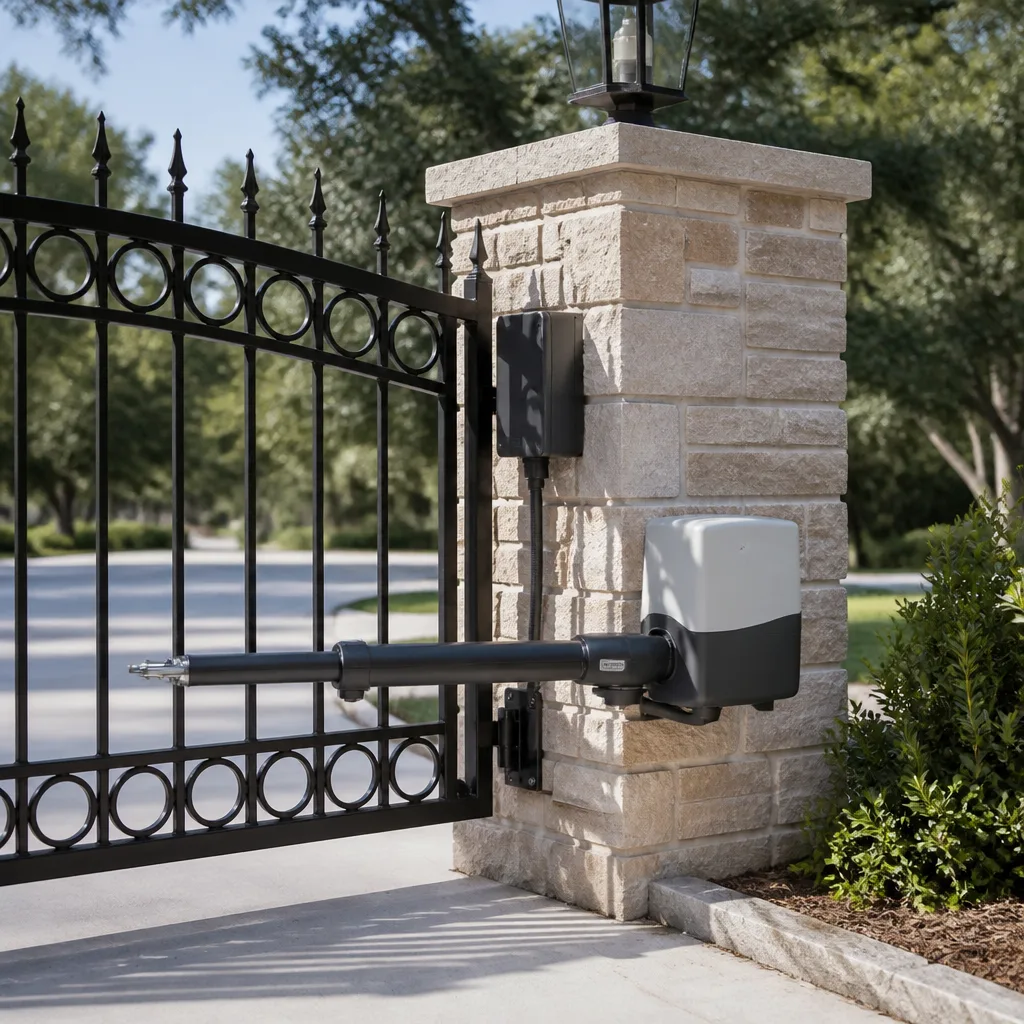
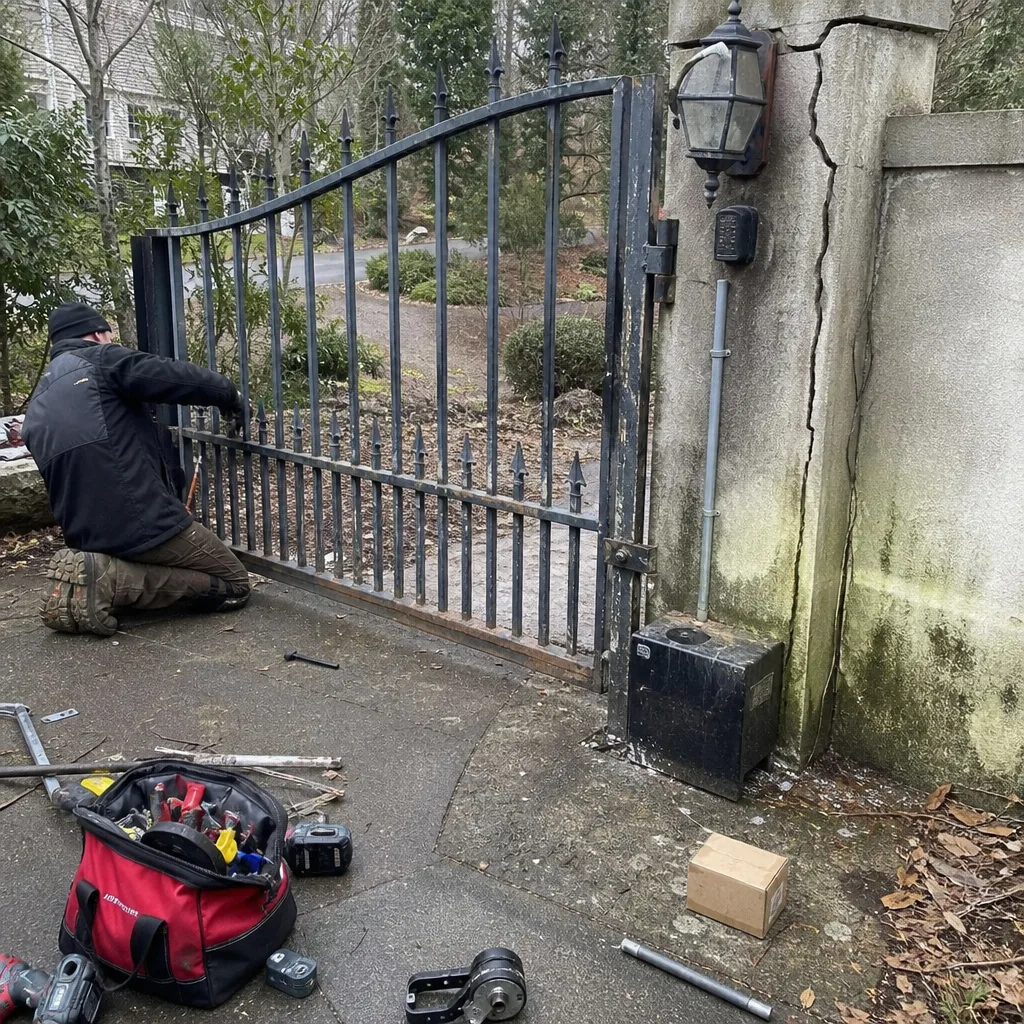 Before
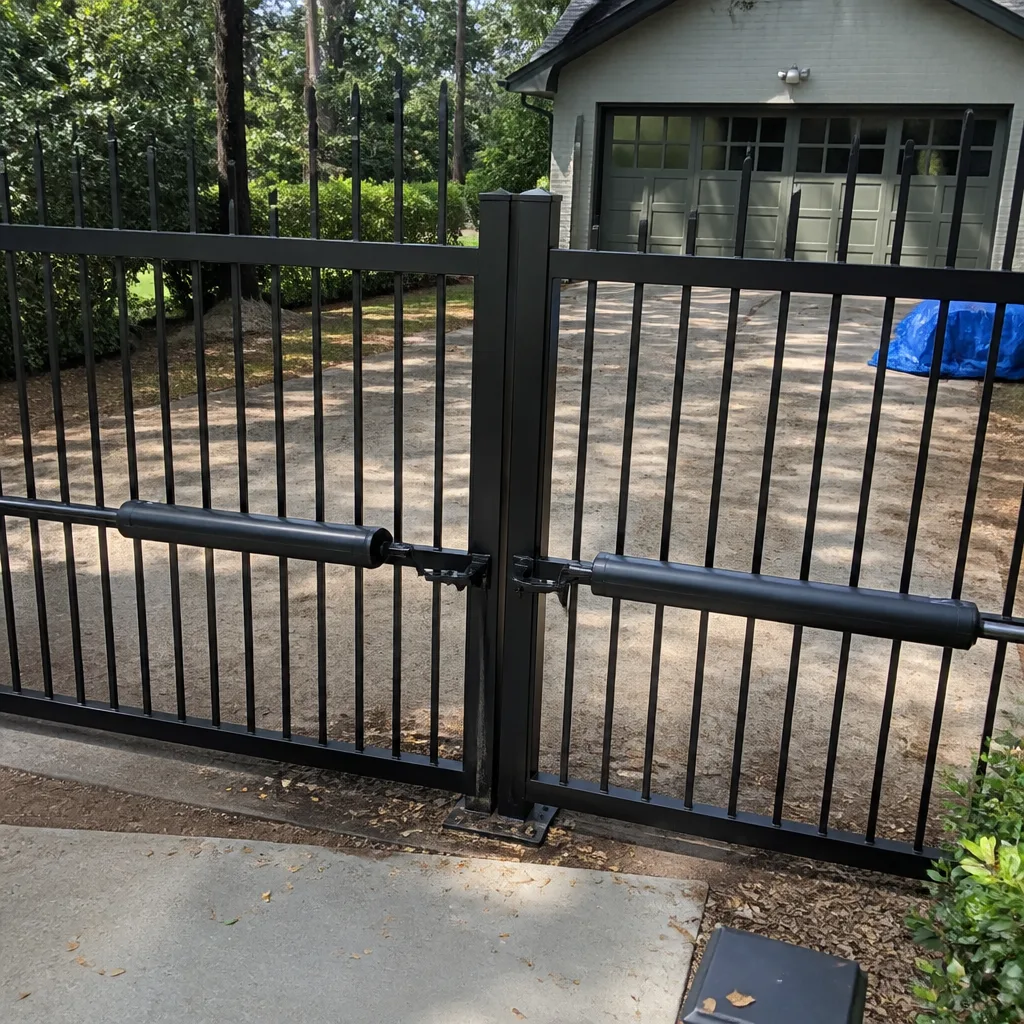 After
After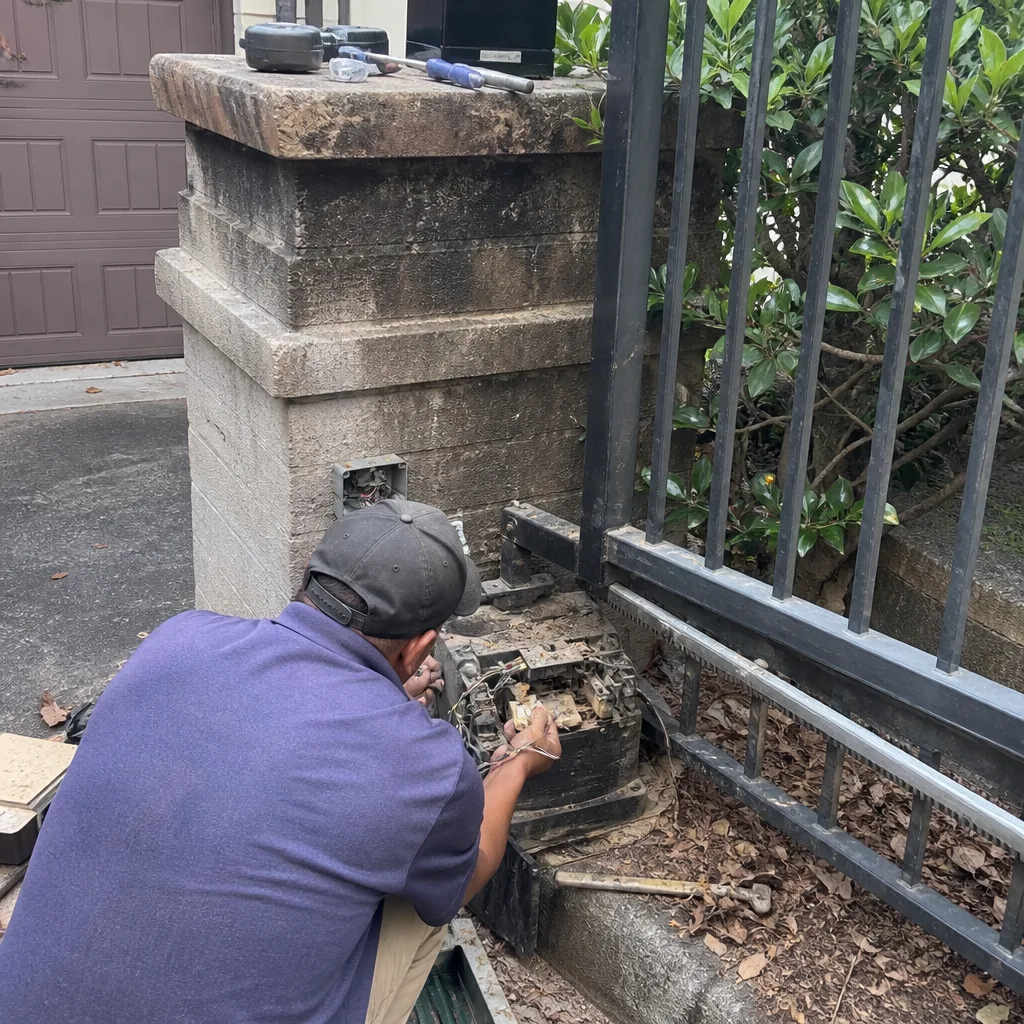 Before
 After
After Before
 After
AfterGate Repair Permits, Codes & Inspections in GA: What You Need to Know
A gate operator swap that took four hours and cost $900 can create a $15,000 insurance problem if it was unpermitted work that later contributed to a vehicle gate strike. In Roswell, most homeowners assume gate repair is like fence repair: fix it and forget it. But Georgia’s electrical and building codes draw a sharp line between maintenance and modification, and crossing it without paperwork doesn’t just risk a municipal fine. It can leave you holding the bill when your insurer denies a claim. This guide - along with our Gate Repair Warning Signs: A Roswell Homeowner’s Reference Guide - maps the actual permit thresholds for Roswell and surrounding Cherokee and Fulton County jurisdictions so you know exactly when paperwork is required before any technician picks up a tool.
Quick Answer
Gate repair in Georgia does not require a permit if the work is limited to mechanical maintenance: replacing hinges, welding pickets, or adjusting limit switches on an existing operator. However, replacing a gate operator, adding 120V electrical service to a gate location, installing new entrapment protection devices, or modifying the gate structure itself triggers permit requirements in Roswell and most of metro Atlanta. The permit serves as your liability paper trail; unpermitted operator replacement is the most common violation we encounter in our Gate Repair services in Roswell homeowner insurance disputes.
Table of Contents
- When Is a Permit Actually Required for Gate Work?
- The UL 325 Standard: What Inspectors Check
- HOA Rules vs. City Code: Which Governs in Roswell?
- Insurance, Liability, and the Real Cost of Skipping Permits
- How to Verify Your Contractor Pulled a Permit
- What Happens During a Gate Inspection
- Permit Costs and Timelines in Roswell
 Before
 After
AfterWhen Is a Permit Actually Required for Gate Work?
Georgia law delegates permit authority to local jurisdictions, and Roswell operates under a dual framework: the city handles building and electrical permits within its corporate limits, while unincorporated areas of Cherokee and Fulton counties fall under county inspection departments. The rules are consistent on the question of gate operators because both jurisdictions adopt the Georgia State Minimum Standard Codes, including the National Electrical Code (NEC) and International Building Code (IBC) with Georgia amendments.
Here is the breakdown we use on every job site in Roswell to determine whether Clause 1 of the Haven Standard - the written price before work starts - needs to include a permit line item.
No Permit Required: Maintenance and Like-for-Like Repair
- Replacing hinges, latches, or wheels on an existing gate
- Welding broken pickets or reinforcing a sagging frame
- Adjusting or replacing limit switches on an existing operator without altering the control board
- Replacing a remote control or keypad while using the existing wiring and low-voltage transformer
- Aligning photo-eyes (the infrared beam that stops the gate if something crosses the path)
- Lubricating chains, racks, or bearings
These tasks do not alter the electrical or structural characteristics of the installation. We document them under the Haven Standard with photographs and a written record, but no permit application is filed.
Permit Required: Electrical and Structural Modifications
- Replacing a gate operator (swing, slide, or barrier arm) with any new unit, even if the brand and model are identical
- Running new 120V electrical service to a gate location that previously had none
- Installing a new low-voltage transformer where the existing one is being relocated or upsized
- Adding entrapment protection devices not present on the original installation: photo-eyes, edge sensors, or pneumatic safety loops
- Modifying the gate structure itself: widening an opening, changing from single-swing to dual-swing, or altering the weight distribution in a way that affects the operator’s load calculation
- Installing a new gate where none existed previously
The operator replacement rule surprises most Roswell homeowners. The logic from the building official’s perspective is straightforward: a new operator introduces new torque curves, new entrapment risk profiles, and new electrical loads. Even a Viking VGO replaced with another Viking VGO requires inspection because the installation date, serial number, and settings are different. We have seen homeowners in the Horseshoe Bend and Martin’s Landing areas assume that “same spot, same brand” means no paperwork. It does not.
The Gray Zone: Control Board Replacement
Replacing a control board on an existing operator sits in a jurisdictional gray area. Some Roswell inspectors treat it as maintenance if the board is an exact manufacturer replacement and no new safety devices are added. Others classify it as operator replacement because the control logic has changed. Our practice is to call the permit desk with the specific manufacturer part number before quoting the job. Under Haven Standard Clause 1, we put that permit determination in writing so the homeowner knows the all-in cost before we start.
The UL 325 Standard: What Inspectors Check
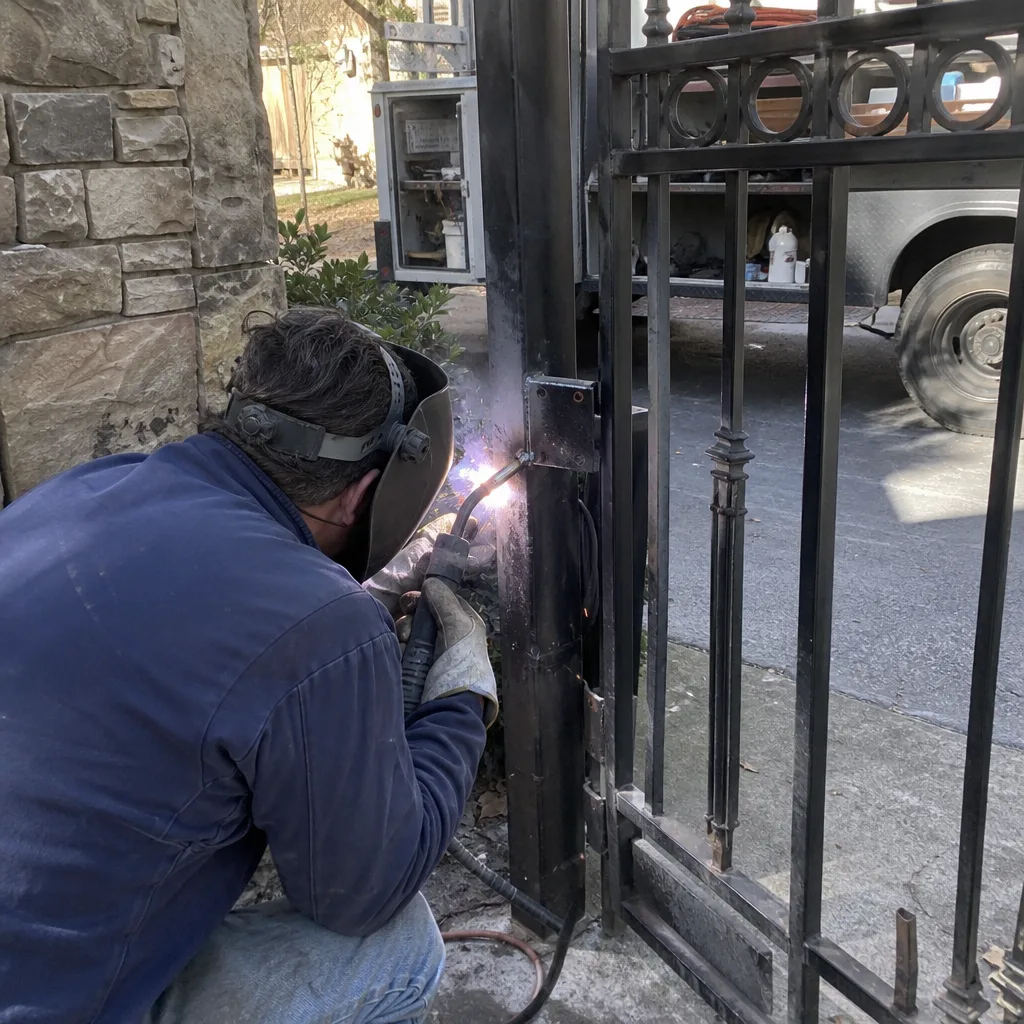
Every gate operator sold in the United States must comply with UL 325, the Standard for Door, Drapery, Gate, Louver, and Window Operators and Systems. Georgia inspectors do not test operators in the field for UL listing; they verify that the installed system meets the standard’s operational requirements. Understanding what those requirements are helps explain why permit inspections exist in the first place.
The Two Classes of Gate Operation
UL 325 divides gate systems into Class I (residential) and Class II-IV (commercial/industrial). Most Roswell residential installations fall under Class I, but gated communities and estate properties with multiple dwellings may trigger Class II requirements. The distinction matters because Class II requires more robust entrapment protection and faster response times.
Entrapment Protection: The Inspector’s Checklist
When a Roswell building inspector examines a permitted gate operator installation, they are looking for specific evidence of compliance. Here is what we prepare for every inspection we attend:
- Primary entrapment device: A photo-eye or edge sensor must stop and reverse the gate within 2 seconds of contact or beam interruption. The inspector will test this with a 2-inch diameter test object placed in the gate path.
- Secondary entrapment device: If the primary device fails, a second protection method must exist. Common combinations: photo-eye plus contact edge, or two photo-eyes at different heights. A single photo-eye alone is insufficient for new installations in Georgia.
- Warning devices: Audible alarm or flashing light required for operators exceeding a certain kinetic energy threshold. Most swing gates over 12 feet or slide gates over 800 pounds trigger this.
- Manual release: The operator must have a clearly labeled manual release mechanism that allows the gate to be moved by hand during power failure. The inspector verifies the label is legible and the mechanism functions.
- Force limitation: The operator’s maximum force must not exceed 40 pounds on a static load test. Ghost Controls and Elite operators have adjustable force settings; we document the final setting in the job record.
The 2-second reversal rule is the most common failure we see on reinspections in Roswell. An operator programmed for a 3-second delay - often the factory default - will fail. We set and photograph the control board timer before the inspector arrives, under Clause 4 of the Haven Standard.
The Documentation Gap
UL 325 compliance is not automatic. The operator manufacturer ships a unit; the installer configures it for the specific gate weight, length, and usage pattern. This is why Georgia requires permits for operator replacement: the configuration step is where safety parameters are set, and an unqualified installer can create a compliant product that operates in a non-compliant system. We leave every Roswell job with a written record of the force setting, reversal time, and photo-eye alignment measurement - the same documentation habit Adrian Vance developed on commercial DoorKing and Elite access-control sites starting in 2014.
HOA Rules vs. City Code: Which Governs in Roswell?
Roswell contains dozens of gated communities and homeowner associations with their own architectural review boards: Horseshoe Bend, Martin’s Landing, Willow Springs, Country Club of Roswell, and numerous smaller enclaves along Azalea Drive and Houze Road. These HOAs often have gate specifications that exceed city code. The question of which rules apply, and in what order, creates confusion that delays projects and generates unexpected costs.
The Hierarchy of Authority
When HOA rules and city code conflict, the stricter standard governs. This is not a matter of HOA preference; it is embedded in Georgia property law and reinforced by Roswell’s zoning ordinances. A practical example: an HOA may require wrought iron gates with specific picket spacing for aesthetic consistency, while city code mandates a maximum opening size to prevent entrapment. The gate must satisfy both - the tighter picket spacing and the smaller opening - even if either alone would pass inspection.
Common HOA Requirements in Roswell
- Material and color restrictions: Many HOAs mandate black powder-coated aluminum or specific wood species; we confirm the approved palette before quoting.
- Operator enclosure standards: Some communities require operators to be housed in matching enclosures or concealed behind landscaping. This affects the electrical permit because the enclosure may need its own footing or drainage.
- Access control integration: HOAs with existing entry systems (TeleEntry, Doorking, or cellular-based systems) often require new installations to integrate with the existing database. This is not a code requirement but an HOA operational one; failing to coordinate can result in a gate that passes inspection but cannot open for residents.
- Maintenance and appearance schedules: Some Roswell HOAs require annual gate service records. Our documented photo records under the Haven Standard satisfy most of these requirements without additional cost.
The Approval Timeline Reality
HOA architectural review in Roswell typically takes 14 to 30 days, and many boards meet only monthly. City permit review, by contrast, usually takes 3 to 5 business days for residential gate operator replacement. The critical path for a project is almost always the HOA, not the city. We advise Roswell homeowners to submit HOA applications before filing city permits, because the HOA may require design changes that affect the electrical and structural drawings submitted to the building department.
We encountered this sequence error in a Martin’s Landing project in 2023: the homeowner pulled the electrical permit first, then the HOA rejected the proposed operator enclosure as inconsistent with community standards. The permit had to be revised and resubmitted, adding three weeks to a job that should have taken four days. Under Haven Standard Clause 1, we now include HOA timeline guidance in every written quote for properties we identify as association-governed.
Insurance, Liability, and the Real Cost of Skipping Permits
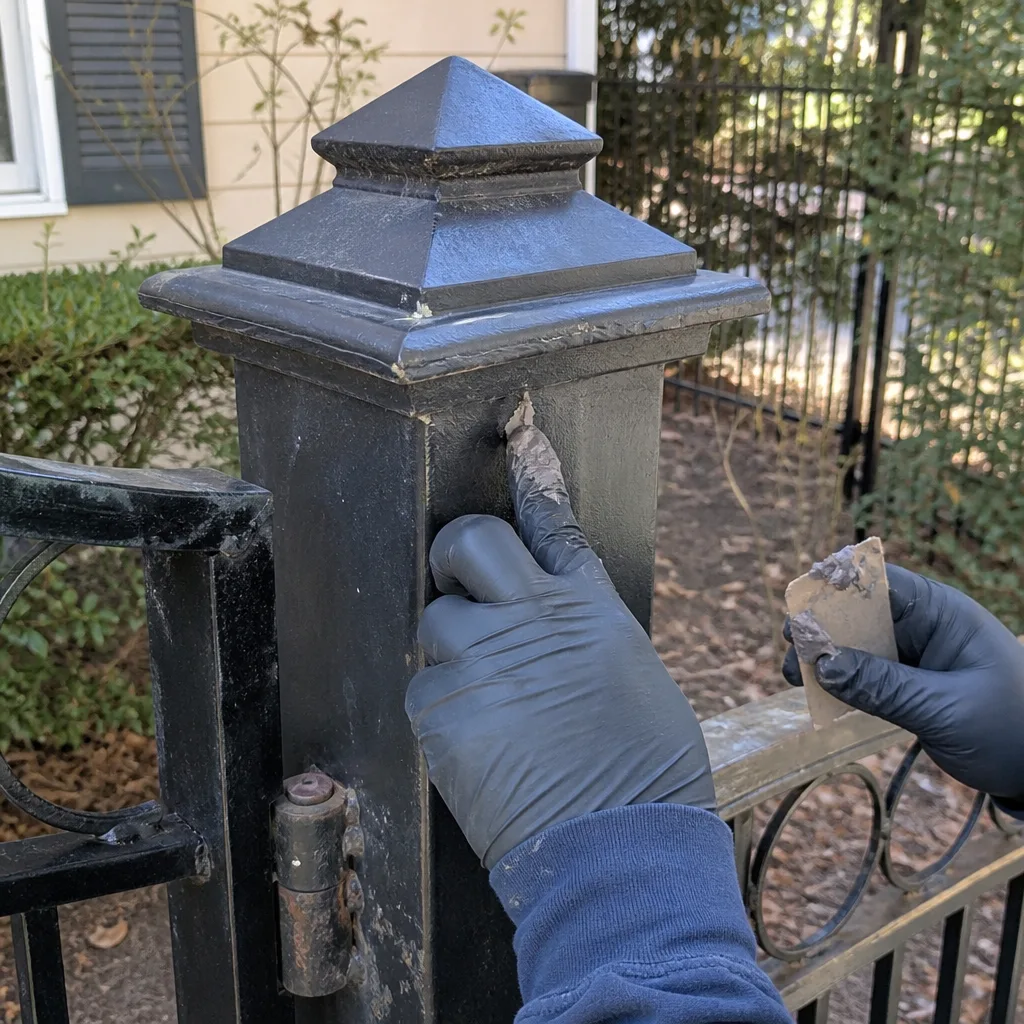
The $15,000 insurance problem referenced in our opening is not hypothetical. It is the documented outcome of a 2022 claim dispute in Fulton County that we reviewed during a free second opinion consultation. A homeowner had replaced their own gate operator without a permit. Eight months later, the gate failed to reverse and struck a visitor’s vehicle. The homeowner’s insurer denied the property damage claim, citing unpermitted electrical work as a contributing factor that voided the policy’s workmanship warranty clause.
How Insurers Use Permit Records
Homeowner insurance policies in Georgia typically contain language similar to this: “Coverage for damage arising from electrical systems is conditioned upon compliance with applicable building codes and permit requirements.” When a claim involves a gate operator - an electromechanical system connected to household power - the insurer’s adjuster will request permit history from the local building department. No permit record means no coverage for that component of the loss, even if the overall policy remains in force.
The Three Financial Exposures
- The direct loss: Vehicle damage, personal injury, or property damage that the insurer declines to cover. In the Fulton County case, this was $11,400 in vehicle repair and medical evaluation.
- The deductible and premium impact: Even if the insurer pays some portion, unpermitted work may trigger a higher deductible or non-renewal. One Roswell homeowner we spoke with saw their annual premium increase $340 after a claim involving unpermitted deck work; gate operators are classified similarly.
- The contractor liability gap: If an unlicensed or uninsured contractor performed the unpermitted work, the homeowner has no recourse against the contractor’s policy. The permit record is often the only evidence that a licensed professional was involved, which matters when subrogation attorneys start tracing responsibility.
The Permit as Paper Trail
The permit application creates a chain of documented accountability: licensed contractor, inspected installation, and approved completion. This chain is what insurers look for when determining whether a loss was caused by “faulty workmanship” (potentially excluded) or “sudden and accidental failure” (typically covered). A permitted installation with passed inspection shifts the loss into the second category. An unpermitted installation defaults to the first.
We pull permits on every job that requires them, and we provide the homeowner with the permit number, inspection schedule, and final approval documentation. This becomes part of the job record under Haven Standard Clause 4, alongside the wiring diagrams and photographs. When we say the permit is your liability paper trail, we mean it is discoverable evidence that protects you in a way a verbal contractor promise cannot.
How to Verify Your Contractor Pulled a Permit
Verifying permit status is straightforward but requires knowing which jurisdiction to query. Roswell straddles two counties, and the permit authority depends on the property’s location relative to the city limits.
Step-by-Step Verification for Roswell Properties
- Determine jurisdiction: Enter the property address into the Vance Gate Repair Roswell home service area confirmation, or check directly at the Roswell city limits map (roswellgov.com) and the Cherokee County parcel viewer (qpublic.schneidercorp.com). Properties with Roswell mailing addresses may fall under county jurisdiction.
- City of Roswell permit lookup: Visit the Roswell Community Development Department permit portal. Search by address or permit number. Active and closed permits display the contractor name, permit type, issue date, and inspection results.
- Cherokee County permit lookup: Use the Cherokee County Planning and Building Services online search. The system requires the property address or parcel ID. Look for “Electrical” or “Building Residential” permit types.
- Fulton County permit lookup: Fulton County uses the DOFIMS system (fultoncountyga.gov). Search by address for permits issued by Fulton County directly; note that the City of Roswell handles its own permits and will not appear in Fulton County records.
- Confirm contractor license: Cross-reference the contractor name on the permit with the Georgia Secretary of State’s professional license database. The license class for gate operator electrical work is typically “Electrical Contractor” or “Low Voltage Contractor” depending on the scope.
- Verify inspection completion: A permit without a final inspection is incomplete and provides no protection. The online systems show inspection dates and results: “Approved,” “Approved with Corrections,” or “Failed.”
Red Flags That Suggest No Permit Was Pulled
- The contractor requests cash payment and offers a “discount for no paperwork.”
- No permit number appears on the written quote or invoice.
- The job is scheduled for completion faster than the jurisdiction’s typical permit timeline (3-5 business days for Roswell city permits).
- The contractor cannot name the inspecting authority when asked directly.
We include the permit number on every written quote that requires one, and we schedule inspections before the final payment is due. This is not extra service; it is standard practice under the Haven Standard.
What Happens During a Gate Inspection
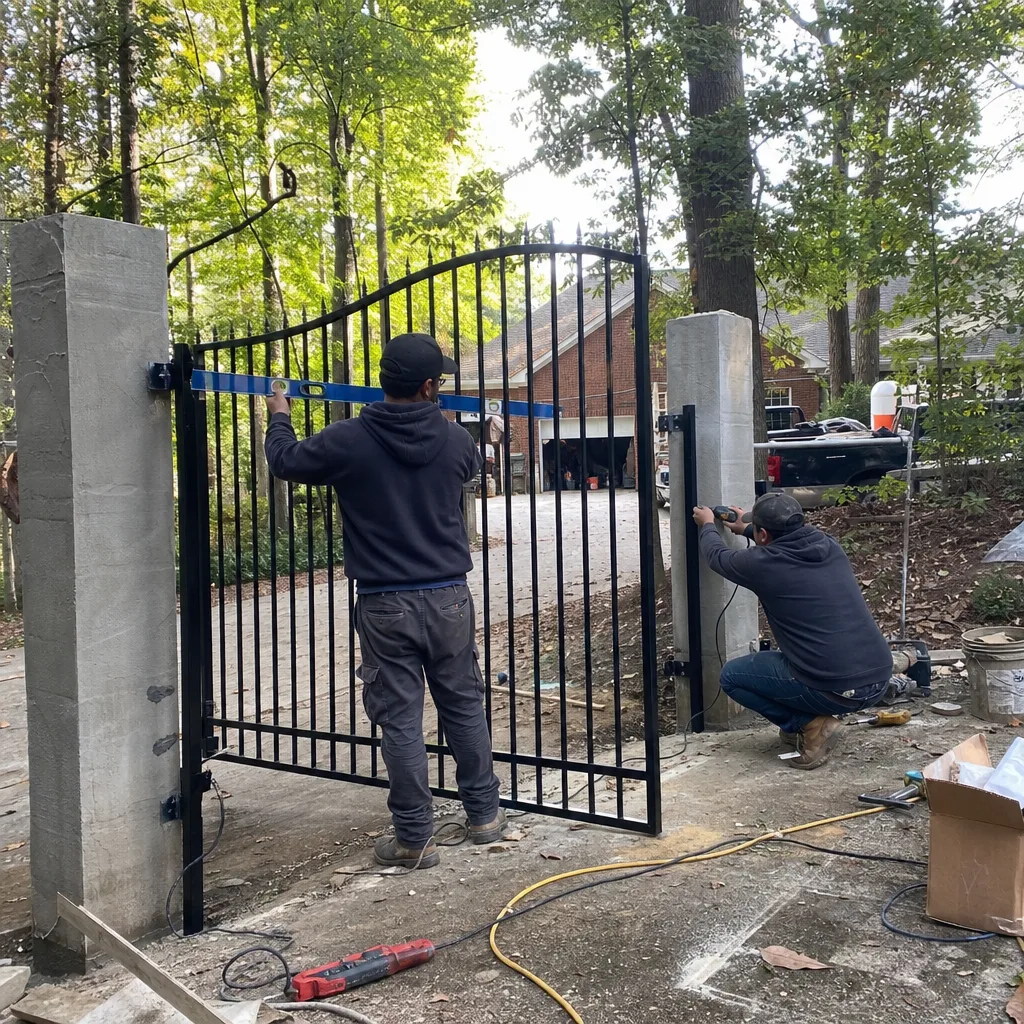
Understanding the inspection process helps homeowners prepare and reduces the anxiety that causes some to avoid permitting altogether. In Roswell and surrounding Cherokee/Fulton County jurisdictions, gate operator inspections follow a predictable sequence.
The Two-Stage Inspection
Most operator replacements require two inspections:
- Rough-in inspection: Conducted after electrical conduit and low-voltage wiring are installed but before walls are closed or the operator is fully mounted. The inspector verifies wire gauge, grounding, conduit fill, and separation of high and low voltage. This stage is sometimes waived for like-for-like replacements where no new wiring is run.
- Final inspection: Conducted after the operator is installed, programmed, and operational. The inspector tests entrapment protection, manual release, warning devices, and force limitation. This is the critical compliance checkpoint.
What the Homeowner Needs to Provide
- Access to the electrical panel serving the gate operator
- Clear gate path free of vehicles, debris, and landscaping obstructions
- The operator’s installation manual and UL listing sheet (we bring these)
- Written documentation of force settings and reversal times (we provide this under Haven Standard Clause 4)
Common Final Inspection Failures in Roswell
Based on our attendance at inspections across Roswell and Cherokee County, these are the failure modes we see most often:
- Photo-eye height: Installed too high or too low for the 2-inch test object. The standard requires the beam to intersect the test object at its center; we measure and record this before the inspector arrives.
- Reversal time: Exceeds 2 seconds from contact to full reversal. Often caused by default factory settings on Ghost Controls and Elite operators that we adjust during installation.
- Grounding electrode: Missing or inadequate grounding for the operator’s dedicated circuit. New installations in Roswell often require a grounding rod if the operator is more than 25 feet from the main panel.
- Warning device inoperative: Audible alarm or strobe light fails to activate during the force test. Sometimes a wiring error; sometimes a programming omission.
When we fail an inspection - it happens, though rarely - we correct the deficiency, reschedule, and absorb the reinspection cost. The 365-Day Done Right Promise covers this; there is no additional charge to the homeowner for bringing a permitted installation into compliance.
Permit Costs and Timelines in Roswell
Permit costs are modest compared to the liability exposure of skipping them, but they vary by jurisdiction and project scope. We quote them explicitly under Haven Standard Clause 1 so homeowners know the all-in cost before work begins.
Roswell City Permits
| Permit Type | Fee Range | Timeline |
|---|---|---|
| Electrical permit, operator replacement (existing circuit) | $75 – $125 | 3-5 business days |
| Electrical permit, new circuit to gate location | $150 – $250 | 5-7 business days |
| Building permit, new gate structure | $200 – $400 | 7-10 business days |
| Combination permit, new gate + operator + electrical | $350 – $600 | 10-14 business days |
These fees do not include plan review charges for complex installations or the cost of engineered drawings for gates exceeding certain wind-load thresholds. Roswell’s wind zone requirements are less stringent than coastal Georgia but still relevant for large cantilever slide gates.
Cherokee County Permits (Unincorporated)
Cherokee County fees run approximately 15% lower than Roswell city fees for equivalent permits, with similar timelines. The county uses an online application system that can expedite simple electrical permits to 2-3 business days. However, unincorporated areas sometimes require additional erosion control documentation if the gate installation disturbs more than 100 square feet of graded surface - a consideration for long driveway gates in the more rural Cherokee County portions of the Roswell service area.
Fulton County Permits (Unincorporated)
Fulton County unincorporated areas south of Roswell city limits use a tiered fee structure based on project valuation. A typical residential gate operator replacement falls into the lowest tier, $100-$175. The county’s inspection scheduling is less predictable than Roswell’s; we typically allow 5-10 business days for final inspection availability.
Hidden Costs to Anticipate
- Reinspection fees: Roswell charges $50-$75 for each reinspection after a failed initial. We absorb this under our Done Right Promise.
- Plan revision fees: If HOA-required design changes alter the electrical or structural plans after permit issuance, some jurisdictions charge for revised drawings.
- Expedited processing: Not consistently available in Roswell or Cherokee County; we do not promise expedited permits.
Common Mistakes to Avoid
- Assuming “repair” means no permit. Replacing a gate operator is legally a replacement, not a repair, in Georgia. The permit requirement catches homeowners who assumed the opposite.
- Letting the contractor “handle it later.” Permits must be issued before work starts, not after. Post-dated permits are invalid and provide no protection. We file before we dispatch.
- Ignoring HOA pre-approval. Starting work before HOA architectural review completes can result in stop-work orders from both the association and the city. We verify HOA status before quoting.
- Accepting a verbal permit claim. A contractor who says “I pulled it” but cannot produce a permit number is almost certainly uninsured. We provide the number in writing with every quote.
- Skipping the final inspection. Some homeowners pressure contractors to finish quickly and “skip the inspector.” A permit without final approval is worthless for insurance and resale purposes. We schedule inspections before final payment.
- Using homeowner pull permits for contractor work. Georgia requires permits to be pulled by the licensed contractor performing the work, not the homeowner. A homeowner-pulled permit for contractor-performed work is invalid and may void the contractor’s insurance.
- Forgetting the documentation. Even a permitted and inspected installation needs records. We leave every Roswell job with the permit number, inspection approval, and our photographic record - the complete paper trail.
When to Call a Professional
Call a licensed gate specialist when your project involves electrical work, operator replacement, or any modification to entrapment protection. For guidance on selecting the right professional, see our How to Hire a Gate Repair Contractor in Roswell: A Step-by-Step Guide. The permit and inspection process is not a DIY procedure; it requires a contractor licensed in the appropriate classification, familiar with UL 325 configuration, and experienced with the specific inspector expectations of your jurisdiction.
Vance Gate Repair Roswell offers free estimates in Roswell - call (706) 928-9815. Every quote includes a written permit determination, the all-in price with fees identified, and a timeline that accounts for both city and HOA review when applicable. We pull permits on every job that requires them, attend every inspection, and leave you with the documented record that protects your insurance coverage and property value.
Frequently Asked Questions
No, if the work is purely mechanical maintenance like hinge replacement, welding, or limit switch adjustment on an existing operator. Yes, if you are replacing the operator, adding electrical service, or installing new safety devices. Call (706) 928-9815 for a free estimate and we’ll tell you exactly which category your project falls into.
Electrical permits for operator replacement on an existing circuit typically run $75 to $125 through the City of Roswell. New circuit installations range from $150 to $250. We include the exact permit fee in every written quote under Haven Standard Clause 1, with no surprise additions.
An HOA cannot override safety code requirements, but it can impose aesthetic and operational standards that are stricter than city code. When standards conflict, the stricter rule governs. We coordinate with Roswell HOAs regularly and build their requirements into our written scope before quoting.
The inspector issues a correction notice identifying the specific deficiency. We correct it, reschedule the reinspection, and absorb the cost under our 365-Day Done Right Promise. You pay nothing additional for bringing a Vance installation into compliance.
Yes. Georgia sellers must disclose unpermitted work on standard disclosure forms, and buyers’ lenders often require permit verification for electrical modifications. Unpermitted operator replacement can delay closing or trigger renegotiation. A permitted installation with final approval eliminates this friction.
Request the permit number in writing, then verify it through the Roswell Community Development portal, Cherokee County Planning and Building Services, or Fulton County DOFIMS - whichever jurisdiction governs your property. The permit should list your contractor’s name and license number. We provide this verification automatically with every job.
The Bottom Line
Gate permits in Georgia are not bureaucratic obstacles. They are insurance-protecting, liability-limiting documentation that proves your electromechanical gate system was installed by a licensed professional, inspected for safety, and approved for operation. The threshold for permitting is lower than most Roswell homeowners assume: operator replacement triggers it, even when the brand and location stay the same. The cost of compliance is modest; the cost of non-compliance, measured in denied claims and uncovered liability, can be catastrophic. Know your jurisdiction, verify your contractor’s permit, and keep the documentation with your property records. The Haven Standard exists because we have seen what happens when these steps are skipped - and we have built our entire operation so that our customers never have to find out. For more guides & resources on protecting your property, explore our blog.
Written by Adrian Vance, Owner at Vance Gate Repair Roswell, serving Roswell since 2014.