
Last updated September 22, 2026
Free on-site gate assessment - hinges, posts, and your LiftMaster or Nice gate operator checked before anything is quoted
The assessment is free and the quote is the invoice.
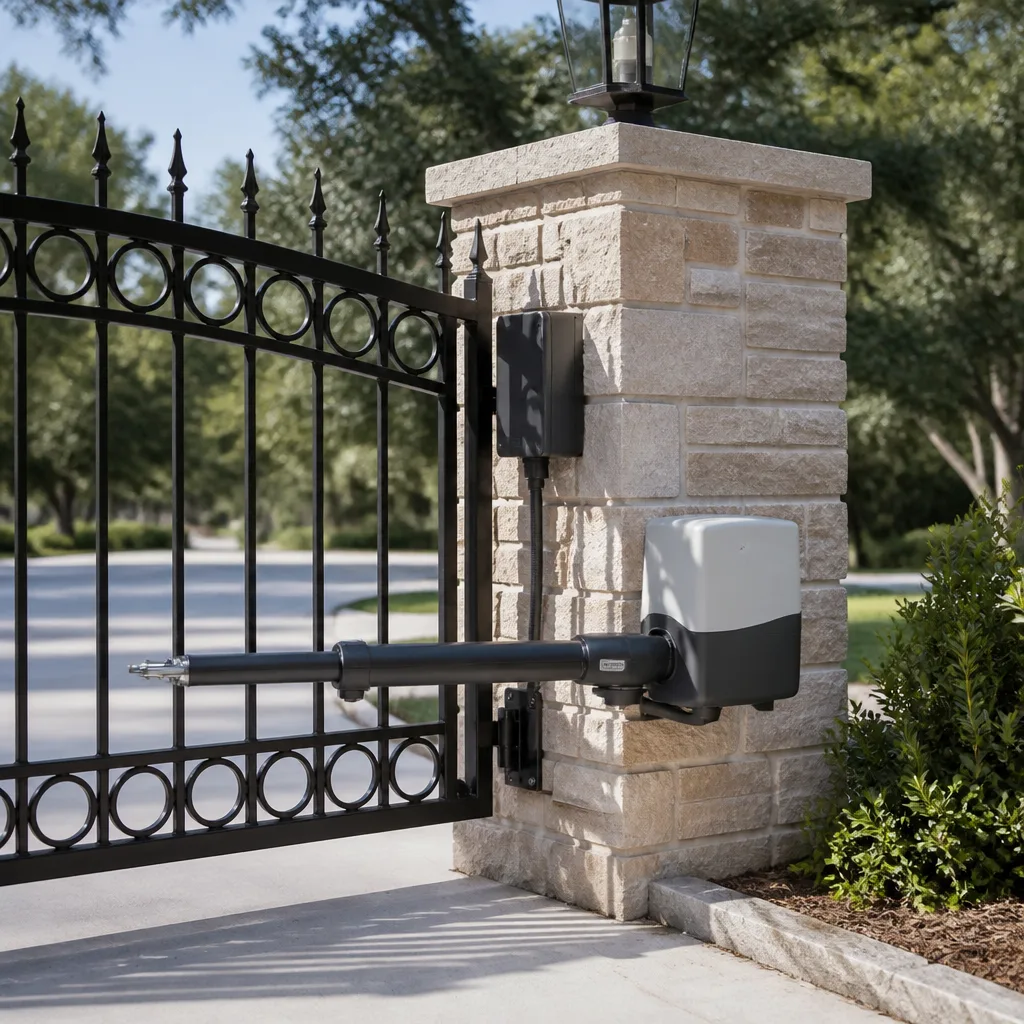
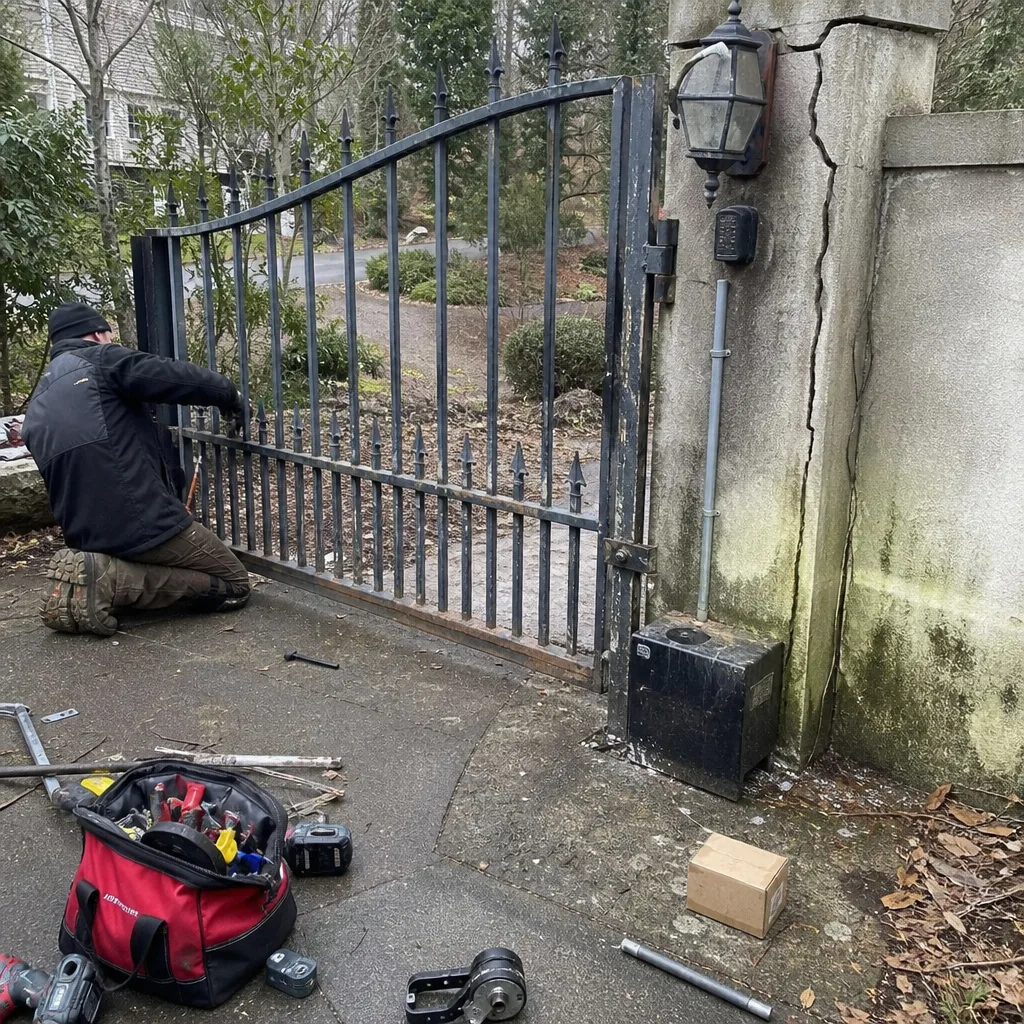 Before
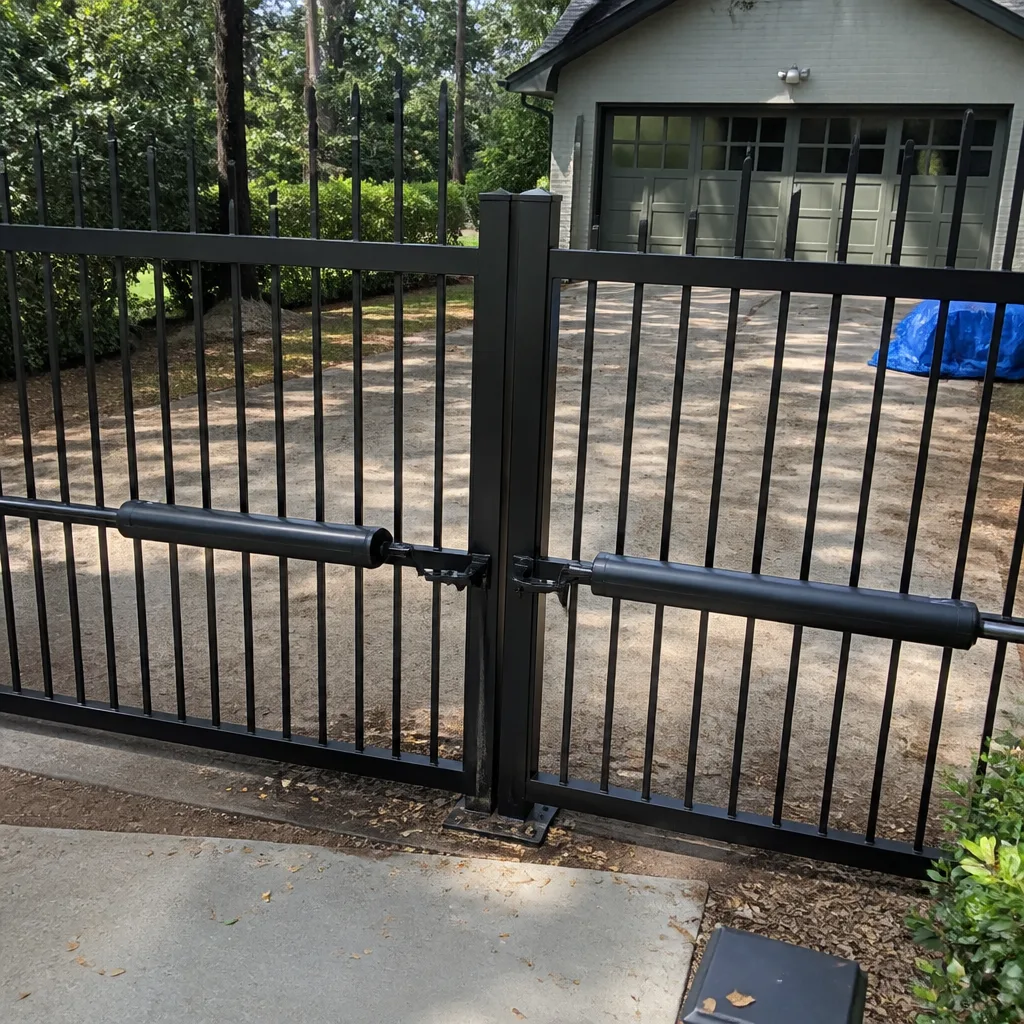 After
After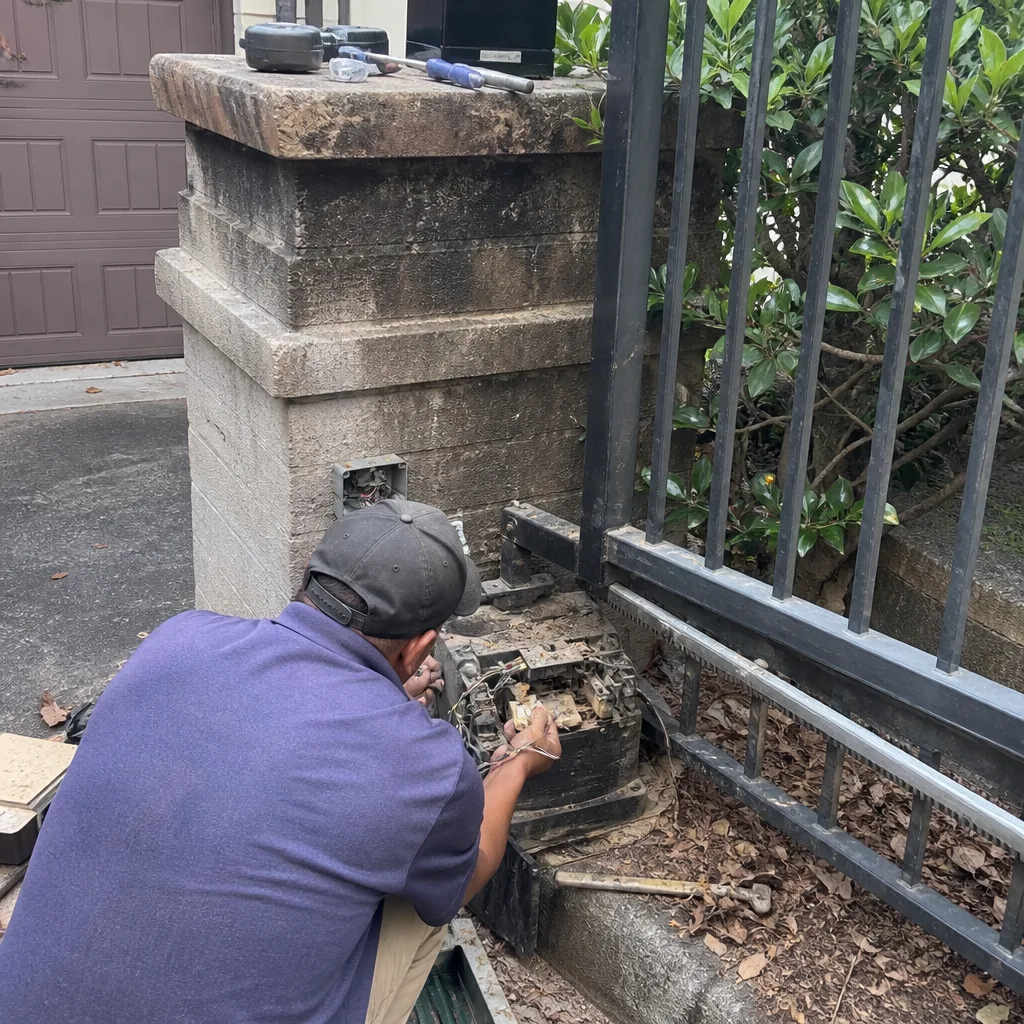 Before
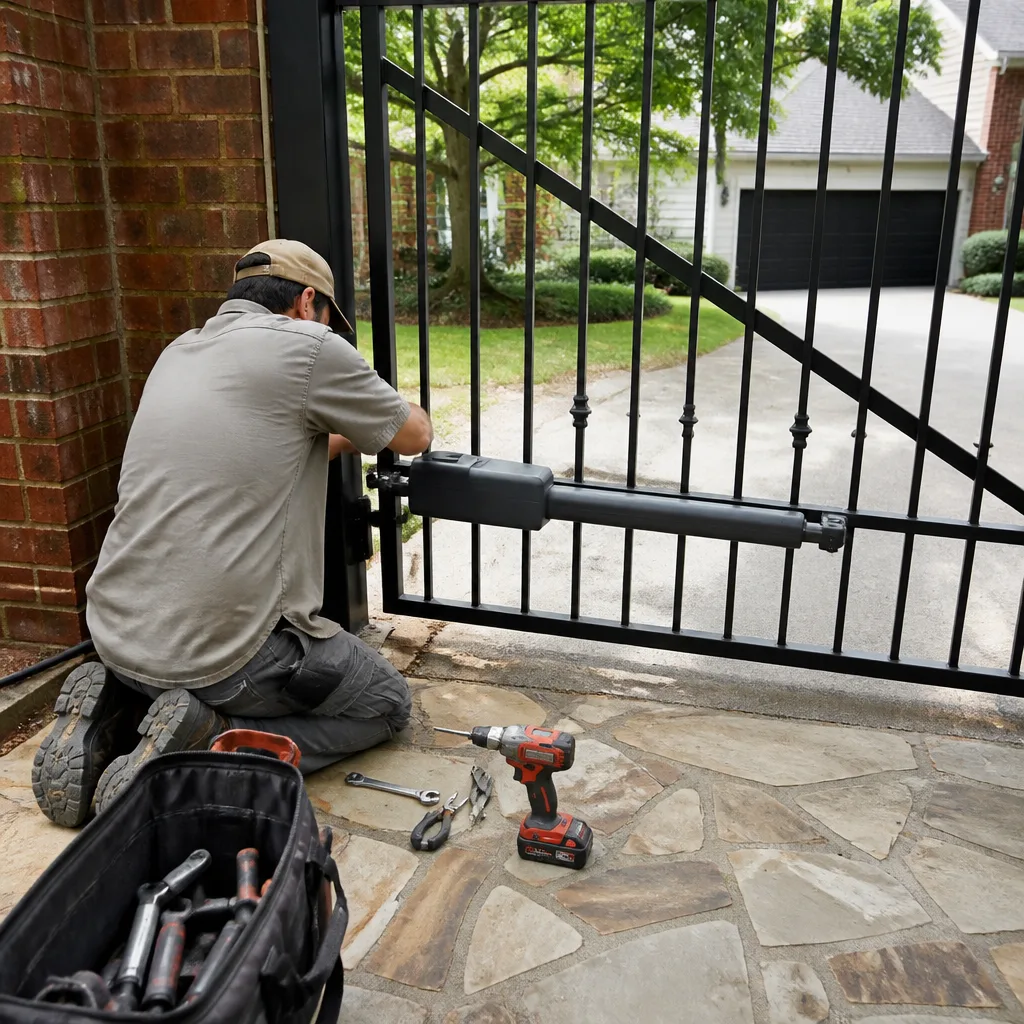 After
After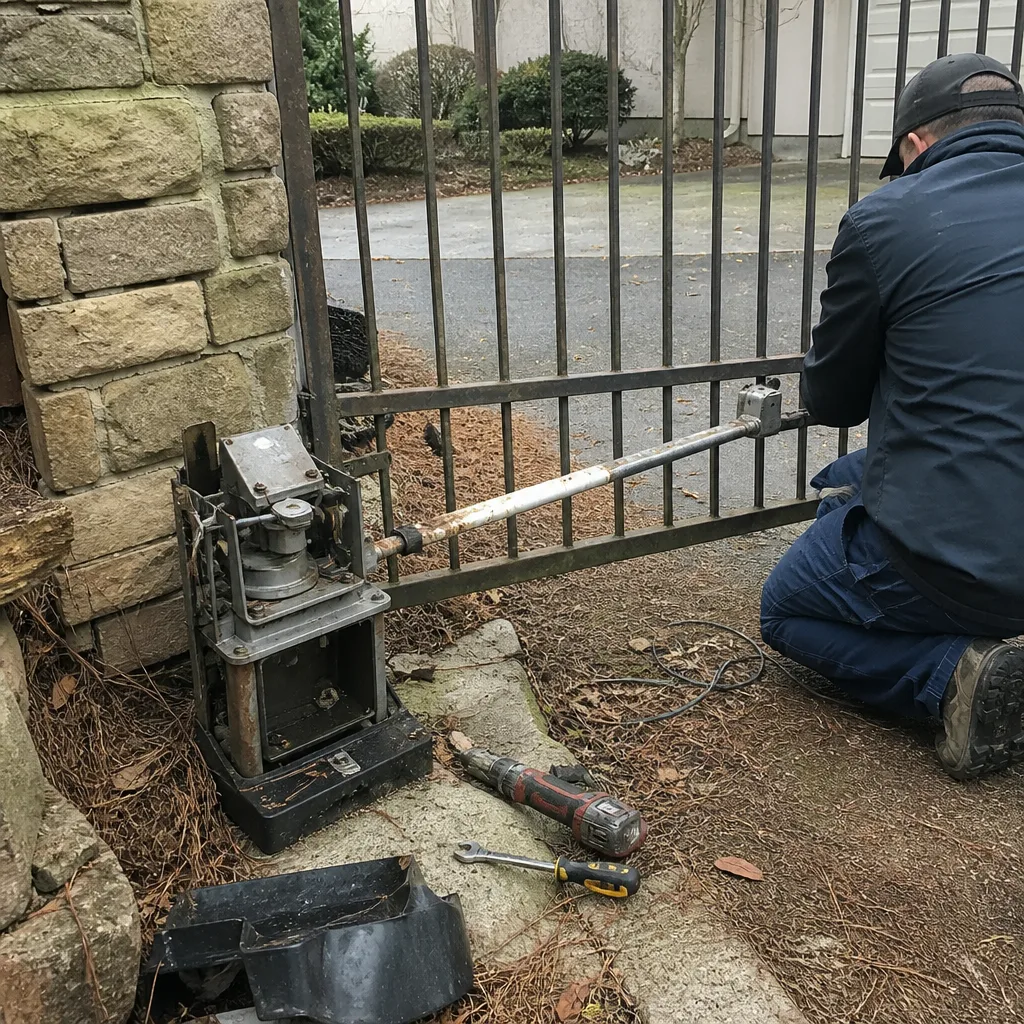 Before
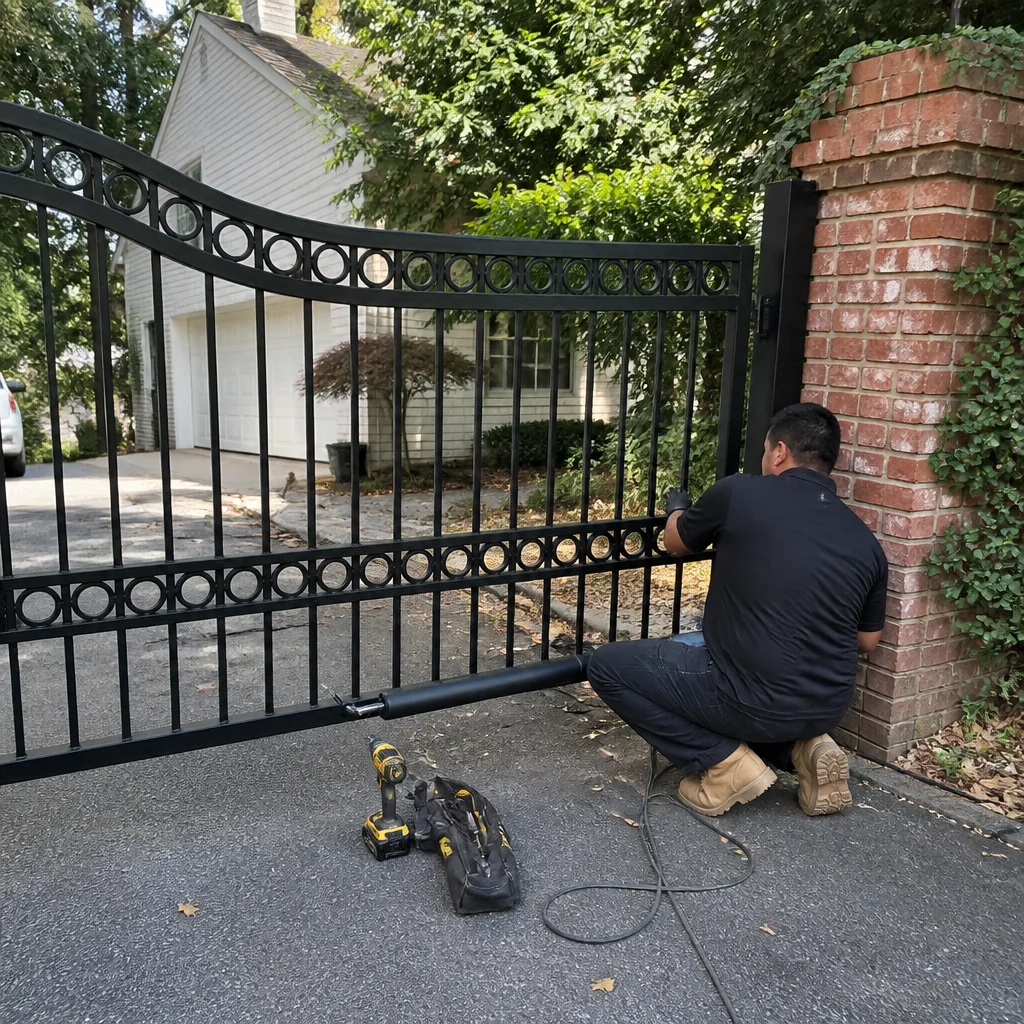 After
AfterGate Repair Warning Signs: A Roswell Homeowner’s Reference Guide
A gate that hesitates two seconds before moving is not the same problem as a gate that moves three inches and stops. One is a control board input delay. The other is a limit switch mis-set. Treating them the same costs you a misdiagnosis, and in our experience across more than 22,000 gates since 2014, the homeowner who can describe the sign precisely gives the technician a starting point instead of a mystery. That distinction shows up directly in the diagnostic bill. This guide maps twelve specific observable behaviors to their most likely root causes, teaches you to distinguish operator wear from control board failure from mechanical obstruction using only timing and sound, and identifies which warning signs demand immediate shutdown versus those that allow continued use with monitoring. Roswell’s clay-heavy soils and freeze-thaw cycles create specific wear patterns you’ll learn to recognize.
Quick Answer
The most common gate repair warning signs are: delayed response to remote or keypad input (control board or power supply issue), partial travel followed by reversal (limit switch mis-set or safety sensor obstruction), grinding or clicking during operation (mechanical wear or stripped gearing), and sagging or visible gate frame distortion (hinge or post failure). Immediate shutdown is required when the gate moves without command, reverses unpredictably, or shows exposed wiring near standing water. Most other signs allow monitored use while you schedule service. Recording exact timing, sounds, and frequency of intermittent failures cuts diagnostic time and cost.
Table of Contents
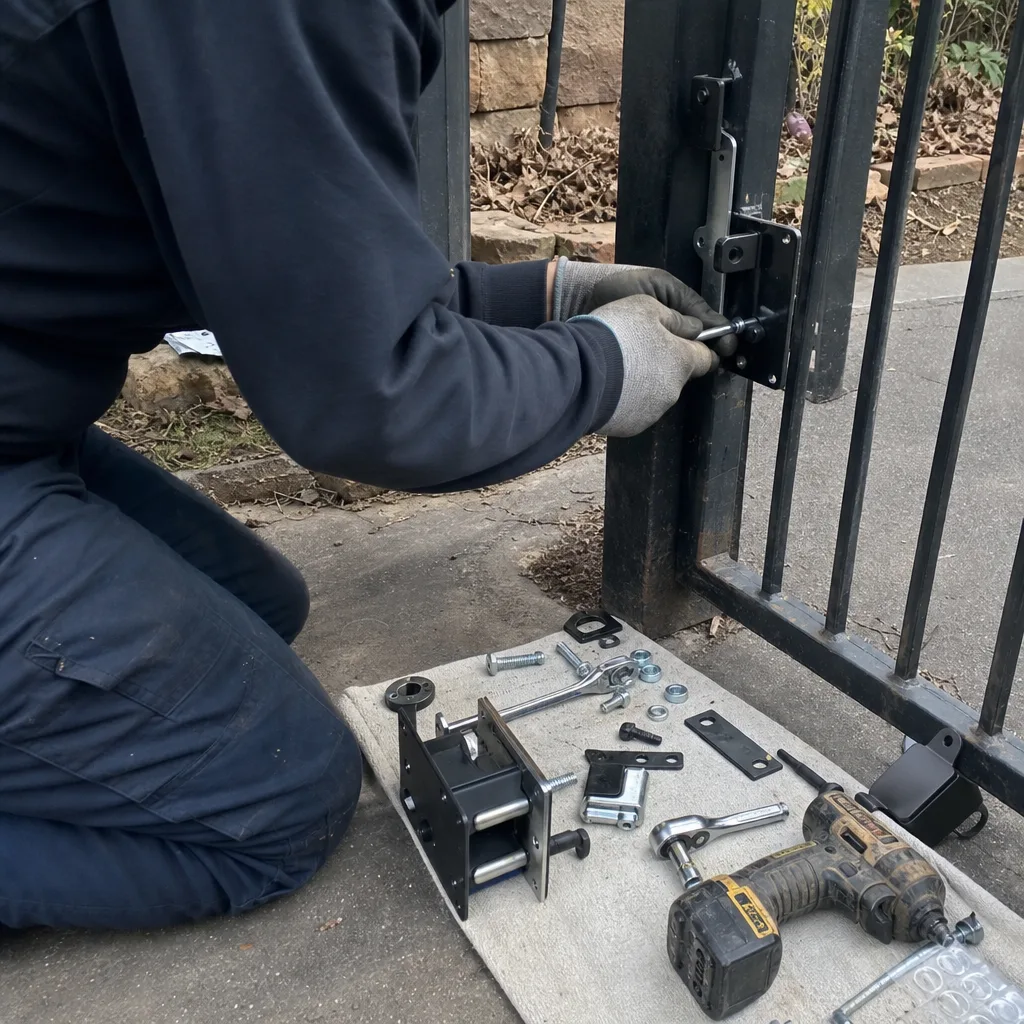
- Symptom-to-Component Reference Table
- How to Diagnose Using Timing and Sound Alone
- Safety Hazard Warning Signs: Immediate Shutdown Required
- Why Intermittent Failures Cost More and What to Record
- Warning Signs vs. Normal Operator Behaviors
- Roswell-Specific Wear Patterns and Climate Effects
- Monthly Maintenance Checklist to Prevent Failures
- When to Call a Professional
 Before
 After
AfterSymptom-to-Component Reference Table
Every warning sign points to a specific component. The table below maps what you observe to what we most commonly find when we open the operator or inspect the gate structure. These are field observations from gates we’ve serviced in Roswell and surrounding markets, not theoretical possibilities.
| Observable Behavior | Most Likely Root Cause | Component to Inspect |
|---|---|---|
| Gate hesitates 1-3 seconds after remote press, then moves normally | Control board input delay or weak transformer output | Control board, power supply, low-voltage wiring connections |
| Gate moves 3-12 inches and stops; no reversal | Limit switch mis-set or limit switch arm detached | Limit switch (open/close position sensors), mechanical linkage |
| Gate moves 3-12 inches and reverses | Safety photo-eye misalignment or obstruction | Photo-eye pair (infrared beam), reflective surface, wiring |
| Grinding noise during travel, especially at mid-span | Worn drive gear, chain, or rack; lack of lubrication | Gear assembly, chain tension, rack teeth, roller bearings |
| Clicking sound, no movement | Stripped gear, failed capacitor, or seized motor | Capacitor (cylindrical component on motor), gear housing |
| Gate moves slower than when installed | Motor winding degradation, low voltage, or mechanical drag | Motor amp draw, track/hinge alignment, power supply voltage |
| Remote works intermittently; keypad always works | Weak remote battery or radio frequency interference | Remote battery, antenna position, nearby RF sources |
| Keypad works intermittently; remote always works | Keypad wiring fault or moisture intrusion in keypad housing | Conduit run, wire splices, keypad gasket/seal |
| Gate drifts open or closed when power is off | Worn brake in operator or hydraulic bypass in fluid operator | Operator brake assembly, hydraulic valve (FAAC, BFT units) |
| Visible sag at free end of swing gate | Hinge pin wear, post settlement, or frame fatigue | Hinge barrel/pin, post footing depth, diagonal frame bracing |
| Slide gate jumps or binds in specific track section | Track debris, roller flat-spot, or frame twist from post shift | Track cleanliness, roller condition, post plumb |
| Gate operates normally but motor runs hot to touch | Excessive cycle frequency, undersized operator, or failing capacitor | Duty cycle rating vs. actual use, capacitor, motor amp draw |
Two of these deserve special attention in Roswell. Gate drift when power is off is more common here than in coastal markets because our freeze-thaw cycles shift post footings, which changes gate geometry and increases mechanical load on the operator brake. And the jumpy slide gate in track section number five is almost always a roller flat-spot caused by debris accumulation, which happens faster in Roswell’s heavy clay soils that track into the gate path during wet seasons.
When you call with a symptom from this table, we can often narrow the probable cause before dispatch. Under Gate Repair in Roswell, we list the diagnostic process in detail. The written price you receive before any work starts, per Haven Standard Clause 1, reflects this narrowed scope rather than a full exploratory diagnostic.
How to Diagnose Using Timing and Sound Alone
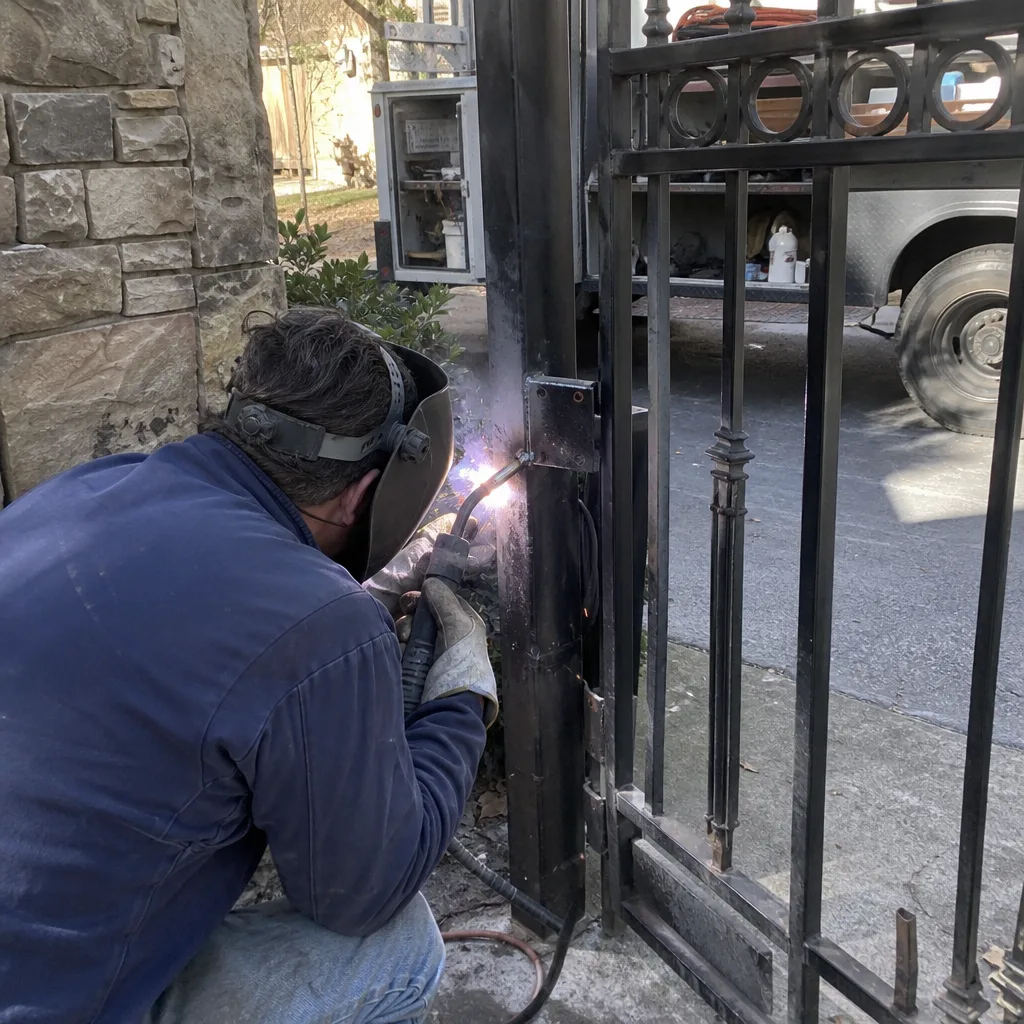
You don’t need tools to separate operator wear from control board failure from mechanical obstruction. You need a stopwatch function on your phone and attention to three variables: the delay between command and movement, the consistency of travel speed, and the character of any sound.
Step 1: Measure the Input Delay
Press your remote or keypad and count. A healthy operator responds in under one second. A delay of 1-3 seconds suggests control board processing lag, often from low input voltage or a failing transformer. A delay beyond 3 seconds, or no response until a second command is given, points to radio receiver or keypad processor failure. Record this precisely: “2.5 second delay, every time” is diagnostically different from “sometimes it doesn’t respond the first time.”
Step 2: Listen During Travel
Stand at the midpoint of gate travel. A smooth hum indicates normal motor operation. A rhythmic grind that speeds up and slows down with gate position indicates mechanical binding, usually track or hinge related. A constant grind at consistent pitch indicates internal gear wear. A high-pitched whine with reduced speed suggests motor capacitor failure, common in LiftMaster and Mighty Mule residential operators after 5-7 years of Roswell summer heat.
Step 3: Note Where Problems Occur
Problems that happen at the same position every time are mechanical or limit-switch related. Problems that happen randomly are electrical or control-related. This single distinction eliminates half the possible causes. A gate that reverses at the same spot every morning at 8 AM, when sun angle hits the photo-eye, has a different problem than one that reverses unpredictably.
We’ve documented this process on thousands of calls. The photo record we leave with you, per Haven Standard Clause 4, includes the timing and sound observations we recorded, so the next technician, whether from Vance or elsewhere, starts from evidence rather than speculation.
Safety Hazard Warning Signs: Immediate Shutdown Required
Some warning signs mean stop using the gate now. Not tomorrow, not after this last errand. The risk of entrapment, uncontrolled movement, or electrical hazard outweighs any convenience.
Immediate shutdown signs:
- Gate moves without any remote, keypad, or vehicle loop command - this indicates control board failure or crossed wiring that can produce uncommanded movement at any time
- Gate reverses direction unpredictably during travel, especially with force that could strike a vehicle or person
- Exposed wiring, arcing, or burning smell from operator housing or conduit runs, particularly after rain when water may have entered underground junction boxes
- Gate panel detached from hinge or roller assembly, creating risk of collapse
- Photo-eye bypassed, taped over, or physically removed - this eliminates the primary entrapment protection required by UL 325
- Gate moves but safety edges (the rubber contact strips on leading edges) do not trigger reversal when pressed
Roswell’s summer thunderstorms create specific electrical hazards. Underground low-voltage wiring runs can wick moisture into conduit, and we’ve found junction boxes with standing water that corroded wire nuts into conductive bridges. If your operator behaved strangely during or after a storm, treat it as a potential electrical hazard until tested.
Shutdown procedure: disconnect power at the breaker, not just the operator disconnect. Lock the gate in closed position if possible. Do not attempt to operate manually if the gate is sagging or if hinge pins are visibly loose; the manual release on a Gate Motor & Opener in Roswell is designed for balanced gates, and an imbalanced gate can fall when released.
Why Intermittent Failures Cost More and What to Record
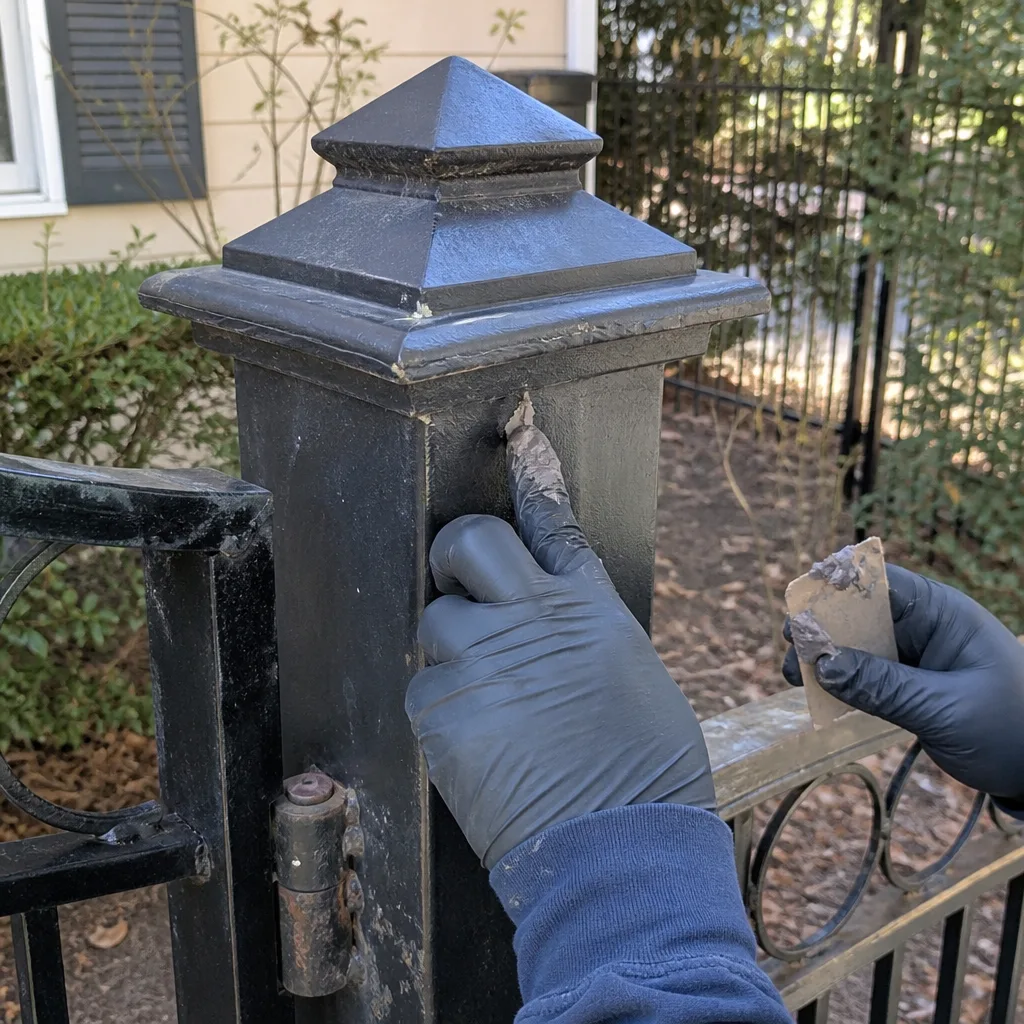
Intermittent failures are the most expensive to diagnose because the symptom is not present when the technician arrives. A gate that fails once every three days, or only in morning cold, or only after five consecutive cycles, gives us nothing to observe directly. We must reconstruct the failure from your records.
The diagnostic cost reflects time: a technician who arrives to a functioning gate must test every component in the suspect chain, often for an hour or more, to find the marginal one. A technician who arrives to a failed gate can often identify the fault in minutes.
What to record during an intermittent event:
- Exact time of day and outdoor temperature - thermal expansion affects solder joints, gear mesh, and photo-eye alignment
- Number of prior cycles that day - some failures only appear after thermal load builds in the motor
- What command was given (remote, keypad, vehicle loop, telephone entry) - this isolates the input path
- What the gate did: nothing, partial movement with direction, partial movement then reversal, normal speed or slow, any sound
- Whether the problem resolved itself or required a reset (power cycle, manual release, waiting)
- Weather conditions: rain in last 24 hours, direct sun on photo-eye, wind direction and speed
We’ve reduced diagnostic bills by 40% or more when homeowners bring this record. Under Haven Standard Clause 4, we photograph and document what we find, but we can’t photograph what already stopped happening. Your record is the evidence we need.
In Roswell’s variable spring weather, we’ve traced intermittent failures to morning condensation on control boards that evaporated by afternoon, and to expansion-contraction cycles in aluminum track that only bound at temperature extremes. The record you keep makes these patterns visible.
Warning Signs vs. Normal Operator Behaviors
Not every unexpected behavior is a warning sign. Some are normal operator functions that homeowners mistake for problems, leading to unnecessary service calls. Knowing the difference saves you the diagnostic fee and the technician’s time - see our more guides & resources for deeper dives.
Normal behaviors often mistaken for problems:
- Auto-close delay: Many operators are programmed with a 30-60 second hold-open after vehicle loop exit. The gate sitting open is not a failure; it’s waiting for the timer. Check your programming before calling.
- Soft-start/soft-stop ramping: Modern operators, especially FAAC and BFT hydraulic units, deliberately slow at travel beginning and end to reduce mechanical stress. This feels like hesitation but is engineered behavior.
- Photo-eye self-test flash: Most photo-eyes flash their LED briefly at startup to confirm alignment. A single flash on power-up is normal; continuous flashing indicates misalignment.
- Manual release resistance: Releasing a gate to manual operation requires overcoming the operator’s mechanical advantage. Significant resistance is normal; grinding or catching is not.
- Keypad backlight timeout: Backlights that dim after 30 seconds of no use are saving battery or transformer load. The keypad is not dead; press any key to reactivate.
- Wind-induced reversal: Gates with force-sensing safety systems may reverse in high wind that the sensor interprets as obstruction. This is correct safety behavior, though it may indicate the force setting is at the sensitive end of its range.
The key distinction: normal behaviors are consistent, repeatable, and associated with specific conditions (time of day, command type, weather). Warning signs are new, worsening, or unpredictable. If you’re uncertain, Vance Gate Repair Roswell home offers free second opinions on any written estimate from another company - bring the paperwork and we’ll review whether the proposed repair addresses a real problem.
Roswell-Specific Wear Patterns and Climate Effects
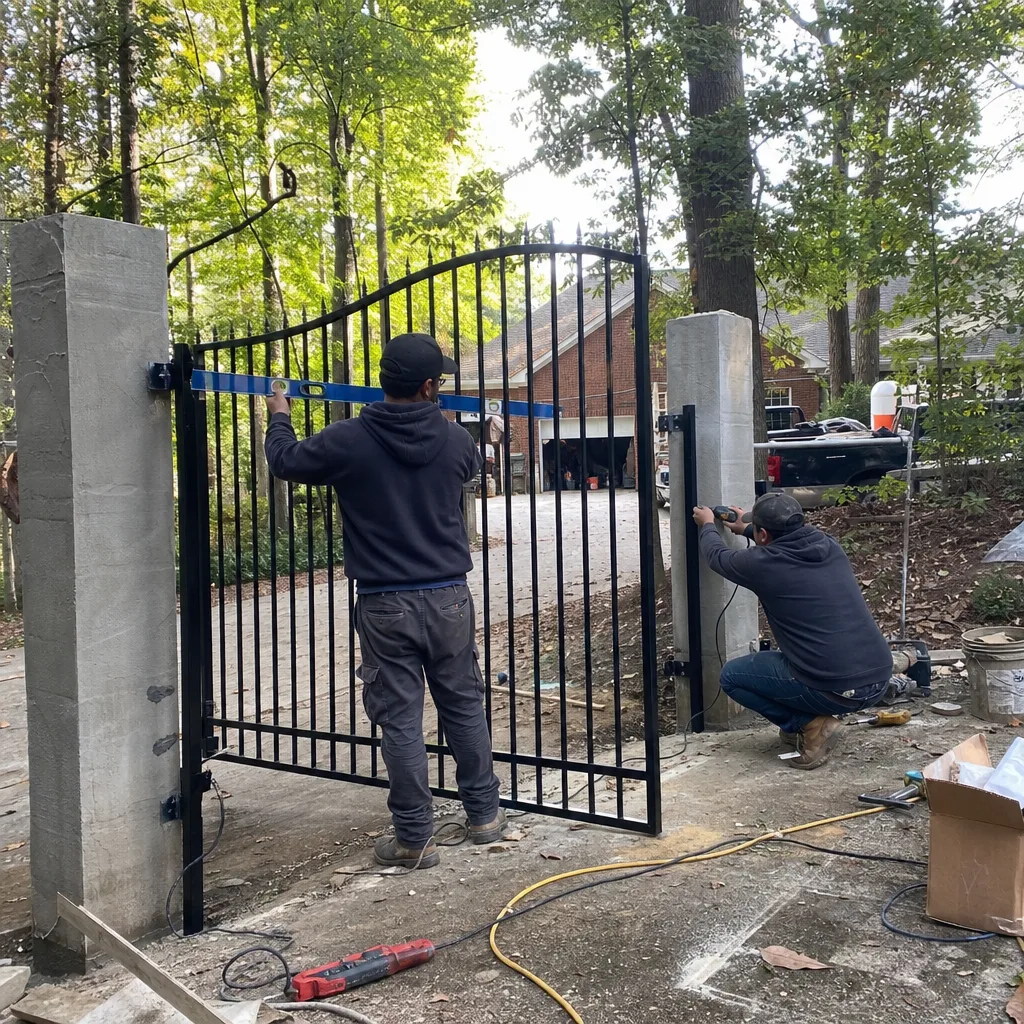
Roswell’s climate and soil conditions create wear patterns that differ from coastal Georgia or the mountain counties. Understanding these helps you anticipate problems and interpret warning signs correctly - our Seasonal Gate Repair Care for Roswell: Year-Round Homeowner’s Guide breaks down what to watch each season.
Clay soil expansion and post movement: Roswell sits on the Piedmont’s heavy clay residuum. Wet seasons swell the clay; dry seasons shrink it. Gate posts set without adequate drainage or depth below the frost line shift seasonally. We’ve measured post lean changes of 1-2 inches between April and October. This shows up as binding in mid-travel, accelerated hinge wear, or operator strain that the control board interprets as obstruction. The warning sign is often a gate that operated fine last fall and now reverses at the same position every time.
Freeze-thaw cycling: While Roswell’s winters are mild, we get 15-25 freeze-thaw cycles annually. Water that enters track, hinge barrels, or operator housings expands when frozen, then contracts. This accelerates corrosion in steel components and cracking in cast aluminum gear housings. The warning sign is new grinding or play that appeared after a cold snap.
Summer heat and capacitor life: Operator capacitors, especially in direct-sun installations common on south-facing Roswell driveways, degrade faster than manufacturer specifications suggest. A capacitor rated for 10 years may fail in 5-7 here. The warning sign is slow starting, especially in afternoon heat, with normal morning operation.
Tree canopy and photo-eye interference: Roswell’s mature tree canopy is an asset until it drops debris on photo-eye lenses or casts moving shadows that trigger false obstruction readings. The warning sign is unpredictable reversal, often at specific times of day when sun angle aligns with branches.
Deed restrictions and access control complexity: Many Roswell subdivisions built 1995-2010 have telephone entry systems integrated with homeowner association management. These systems add relay logic and communication wiring that complicates diagnosis. A gate that fails only for visitors but works for residents often indicates telephone entry relay failure, not operator failure. We service these integrated systems, including the access control components, as part of our scope.
Monthly Maintenance Checklist to Prevent Failures
Most warning signs develop gradually. Monthly inspection catches them before they become failures requiring emergency service. This checklist takes ten minutes and requires no tools beyond a flashlight and your hands.
- Visual track and hinge inspection: Look for debris accumulation, rust on steel track, cracks in weld joints, and gate panel alignment relative to the opening. In Roswell, pay special attention to clay mud hardening in track after rain.
- Photo-eye cleaning and alignment test: Clean lenses with a soft cloth. Wave a broom handle through the beam during closing cycle; gate should reverse immediately. Check that both LEDs are solid, not flashing.
- Manual operation test: Disengage operator and move gate by hand. It should travel freely with moderate effort. Binding, grinding, or excessive weight indicates mechanical problem developing.
- Hardware torque check: Visually inspect hinge bolts, roller brackets, and chain tensioner bolts for loosening. Do not torque without proper tools, but note any visible gap or movement.
- Control board and conduit inspection: Open operator housing. Look for moisture, insect nests, or corrosion on terminals. Check that conduit seals are intact, especially after freeze-thaw season.
- Remote and keypad function test: Test from normal use distance. Note any delay or required repeat press. Replace remote battery annually regardless of apparent function.
- Safety edge test: If your gate has contact edges, press them during closing cycle. Gate must reverse. If it does not, stop use and call for service.
Document what you find, with dates. This becomes the baseline that makes new warning signs obvious. Under Haven Standard Clause 4, we photograph condition at every service visit and add to your record, but your monthly observations between visits complete the picture.
Common Mistakes to Avoid
- Ignoring a change because the gate still works. A gate that reverses once a week will soon reverse daily, then every cycle. The repair cost is identical at either stage, but the inconvenience and security exposure are not.
- Adjusting force settings to overcome binding. Increasing operator force to push through a mechanical problem overrides safety systems and risks entrapment. The correct fix is removing the binding source.
- Assuming all operators are similar. A Mighty Mule residential unit and a FAAC commercial hydraulic operator have different normal sounds, different maintenance needs, and different warning sign thresholds. Generic advice from online forums often misapplies.
- Calling for “same-day” installation when you need repair. Installation companies optimize for new sales, not diagnostic skill. A repair specialist will correctly identify whether your operator is worth repairing or should be replaced.
- Accepting verbal estimates. In Roswell’s competitive gate service market, some companies provide low verbal quotes that expand once work begins. A written price before work starts, per Haven Standard Clause 1, is your protection.
- Neglecting seasonal preparation. Roswell’s spring pollen and fall leaf drop accumulate in track and photo-eye housings. Cleaning before heavy season prevents the debris-related failures that peak in May and October.
- DIY electrical work on 120V operator supply. Low-voltage control wiring is relatively safe to inspect. The 120V supply to the operator, and any underground conduit runs, should be handled by a licensed electrician or trained gate technician. We’ve seen homeowner wiring repairs that created fire hazards.
When to Call a Professional
Call when a warning sign is new, worsening, or involves safety systems. Call when you’ve recorded an intermittent failure and need diagnosis. Call when you’re uncertain whether a behavior is normal or a warning sign. Call before the problem becomes an emergency that limits your access or security.
Vance Gate Repair Roswell offers free estimates in Roswell. We answer live, 24 hours a day, at (706) 928-9815. Every estimate is written and delivered before any work starts, per Haven Standard Clause 1. Every completed repair carries the 365-Day Done Right Promise: if it’s not right, we make it right at no additional charge.
Our technicians are background-checked, uniformed, and named with photo provided before arrival. We service nine major automation brands, including LiftMaster, FAAC, BFT, and Mighty Mule, so we repair what you have rather than steering you toward replacement. And every visit leaves a documented photo record of what was found, what was adjusted, and what was installed - the same documentation habit Adrian Vance developed on commercial access-control sites starting in 2014.
Frequently Asked Questions
Most residential gate repairs in Roswell range from $180 for limit switch adjustment or photo-eye realignment to $650 for operator gear replacement or control board replacement, with swing-gate motor replacements typically running $1,200-$2,400 depending on brand and whether the arm bracket is intact. We provide a written, itemized price before any work begins, and we offer free second opinions on any written estimate from another company. Call (706) 928-9815 for an exact quote - estimates are free.
Same-day repair is often available for urgent safety issues and common failures with parts we stock, though we do not promise same-day service for installation or scheduled maintenance. A live person answers our phone 24/7, and we’ll tell you honestly whether your specific problem and required parts allow same-day resolution or next-day scheduling. Call (706) 928-9815 to discuss timing.
A full installation includes post setting with proper depth and drainage for Roswell clay soils, gate panel hanging and alignment, operator mounting and programming, safety device installation (photo-eyes and safety edges), control wiring in conduit, and testing of all functions. We also provide a written scope, a written price, and photographic documentation of every stage. For details, see Gate Installation in Roswell.
Replacement is typically warranted when the operator is beyond 12-15 years, major components (gear housing, motor, control board) have failed sequentially, or the manufacturer no longer supports parts. Repair is justified when the failure is isolated, the operator has reliable parts availability, and the gate structure itself is sound. We evaluate this honestly; our business model is repair-first, and we service nine brands so we’re not motivated to sell you a new unit.
This pattern usually indicates thermal failure: a capacitor, control board component, or motor winding that functions at cooler temperatures but fails as heat builds. In Roswell’s direct-sun installations, housing temperatures can exceed 140°F. Record the exact failure time and outdoor temperature, then call for diagnostic testing that includes thermal monitoring.
We handle the complete system: 120V power supply to the operator, low-voltage control wiring in conduit, safety photo-eyes, safety edges, vehicle loops, keypads, and telephone entry integration. We also verify that all safety devices meet current UL 325 standards. The written scope you receive before work starts specifies exactly which components are included.
The Bottom Line
Gate warning signs are specific, not vague, and each points to a diagnosable component. The homeowner who observes precisely, records intermittent events completely, and distinguishes normal operator behavior from genuine warning signs gets faster, less expensive repairs. Roswell’s climate creates predictable wear patterns in clay soil movement, thermal cycling, and debris accumulation that attentive homeowners can anticipate. When you need professional diagnosis or repair, demand written pricing before work starts, documented evidence when the technician leaves, and a warranty that covers the full year. These are not luxuries; they are the minimum standard for a repair that lasts.
Written by Adrian Vance, Owner at Vance Gate Repair Roswell, serving Roswell since 2014.